Landscaping
What Is the Rule of 3 in Landscaping in Baton Rouge?
In Baton Rouge, the Rule of 3 in landscaping is more than a simple design guideline; it’s a strategic framework for creating a resilient, beautiful Southern retreat.
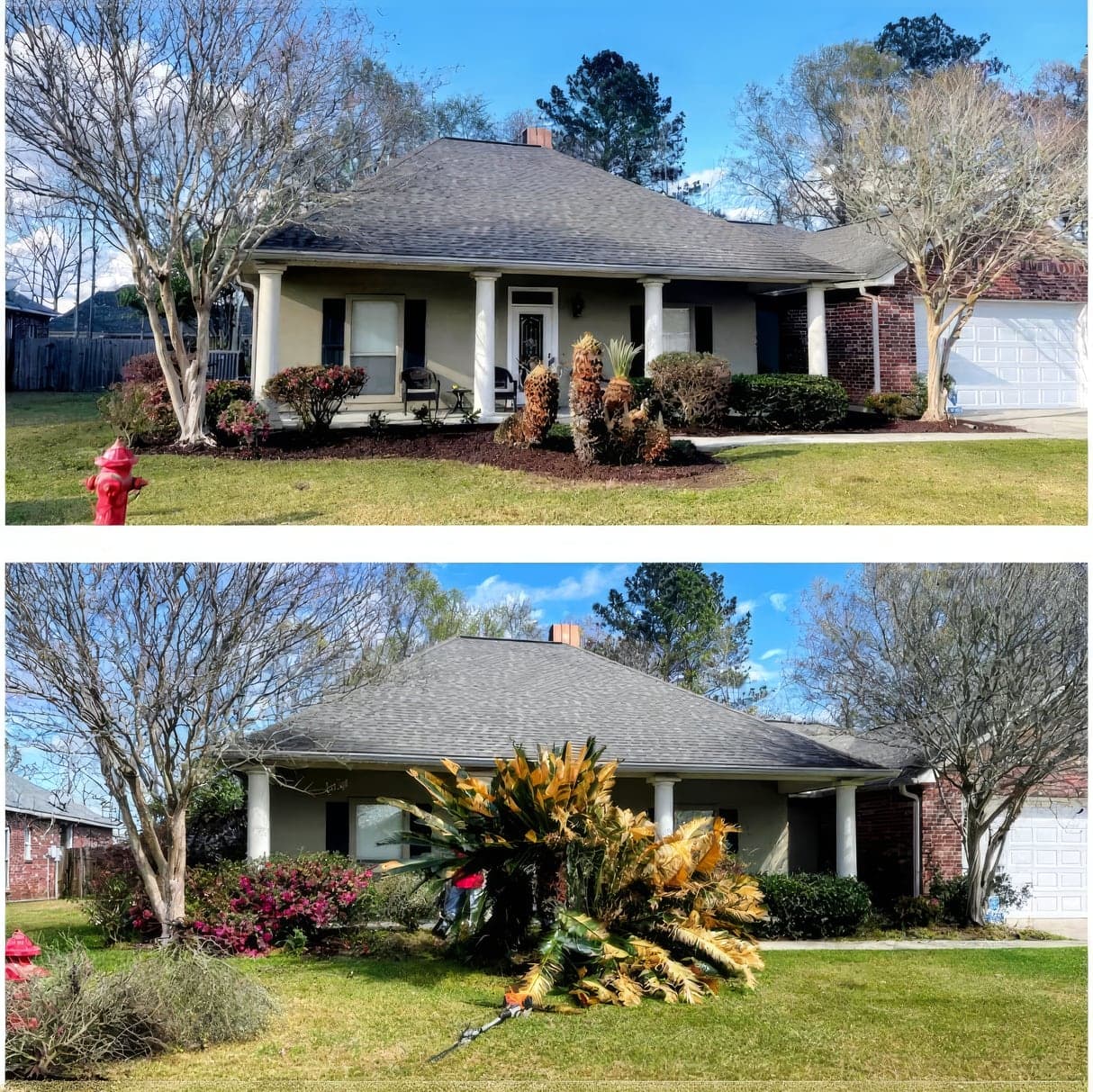
In Baton Rouge, the Rule of 3 in landscaping is more than a simple design guideline; it’s a strategic framework for creating a resilient, beautiful Southern retreat. It involves grouping plants and materials in odd numbers, typically three, to craft a landscape that thrives year-round in Louisiana’s demanding heat and humidity.
Walk through many Baton Rouge neighborhoods in the thick of an August afternoon, and you’ll see a familiar story. You’ll see gardens that looked glorious in April now looking stressed, wilted, and overwhelmed. You’ll see planting beds that have become a chaotic jumble of growth, where individual plants are lost in a sea of undifferentiated green. This is the predictable outcome of a landscape plan that doesn’t account for the relentless reality of our subtropical climate. Here at Hernandez Lawnscape, a premier landscape company with over two decades of hands-on experience shaping outdoor spaces from the Garden District to the University Club, we’ve seen this scenario play out time and time again. That’s why we’ve built our entire philosophy around a principle that brings both beauty and resilience to the forefront: the Rule of 3, specifically adapted for Baton Rouge.
Our core thesis is simple yet profound: Beyond the basic design principle, the Rule of 3 is the essential framework for Baton Rouge homeowners to create a resilient, year-round Southern retreat by layering plants and materials specifically suited to thrive in Louisiana’s unique heat and humidity. It’s not just about aesthetics; it’s about creating a sustainable, living system that works with our environment, not against it. It’s about crafting a space that feels intentional, calming, and beautiful, even when the heat index is soaring past 100 degrees.
Understanding the Rule of 3: Beyond the Basics
Before we dive into the specifics of a Baton Rouge application, it’s important to grasp the foundational Core Design Principles at play. The Rule of 3 is a concept that artists, designers, and photographers have used for centuries to create more engaging, dynamic, and natural-looking compositions. Its power lies in its simplicity and its appeal to our innate sense of balance.
What is the Rule of 3 in Landscaping? (The General Concept)
At its most basic, the Rule of 3 in garden design dictates that elements, be they plants, boulders, or decorative pots, are more visually appealing when grouped in odd numbers. Three is the most common and versatile, but five, seven, or even nine can also be used for larger installations. Why does this work? Our brains are wired to find patterns. When we see an even number of objects, like two or four shrubs in a line, our mind pairs them up, creating a sense of formal, static order. This can look rigid and unnatural, like soldiers standing at attention.
An odd number, however, forces our eyes to move around the grouping, creating a more dynamic and interesting visual experience. It encourages the creation of triangles, which are inherently stable and pleasing shapes. This principle helps achieve asymmetrical balance, a cornerstone of naturalistic design. Instead of perfect, mirrored symmetry, you get a composition that feels balanced but not boring. This simple rule is the first step toward achieving Unity and Repetition in Landscaping, creating a cohesive look that carries through the entire yard.
Answering a Common Question: What is the Rule of Thirds in Landscaping Design?
Often confused with the Rule of 3, the Rule of Thirds is a related but distinct principle of composition. Imagine overlaying a tic-tac-toe grid onto your landscape view. The Rule of Thirds suggests that the most important elements and focal points should be placed along these lines or, even better, at the four points where the lines intersect. Placing a specimen tree or a vibrant cluster of flowers off-center at one of these intersections is far more compelling than placing it directly in the middle of the view.
So, how do they work together? You use the Rule of 3 (the grouping of three plants) to create a powerful element, and then you use the Rule of Thirds to position that element for maximum impact. For instance, you might plant a trio of beautiful Japanese Maple trees not in the center of your lawn, but at one of the powerful intersection points in the back-left third of your yard, creating a dramatic Focal Point Creation that draws the eye and invites exploration.
Why This Simple Rule is a Game-Changer for Baton Rouge Gardens
In many parts of the country, landscaping is a battle to create lushness. Here in Baton Rouge, we have the opposite problem. Our long growing season, ample rainfall, and high humidity mean that plants grow with an almost aggressive vigor. Without a clear design framework, a garden can quickly devolve from lush to chaotic. The “overstuffed” look is a common affliction, leading to poor air circulation, increased risk of fungal disease, and a general sense of visual clutter.
The Rule of 3 is the perfect antidote. It imposes a gentle but firm sense of order on this natural abundance. By forcing you to think in deliberate groupings rather than planting one of everything, it helps manage scale and proportion. It creates intentional “breathing room” or negative space around each trio, allowing the unique form, color, and plant texture of your chosen species to be appreciated. This intentionality is the secret to transforming a potentially wild Southern jungle into a serene and sophisticated Southern Garden Style retreat.
The Hernandez Lawnscape Method: Adapting the Rule of 3 for Louisiana’s Climate
A general design rule is only as good as its application. For us, the Rule of 3 isn’t just about odd numbers; it’s about choosing the *right* three elements, plants, stones, mulches, that are genetically programmed to succeed in our USDA Hardiness Zone 9a. It’s about understanding the challenges of our heavy Gumbo Clay Soil and planning for the torrential downpours that can overwhelm a poorly designed space. This is where our local expertise, honed over 20 years of Baton Rouge Landscape Design, transforms a simple concept into a powerful strategy for success.
The ‘Baton Rouge Trio’: A Foolproof Recipe for Sun-Drenched Beds
One of the most common requests we get is for a simple, beautiful, and tough-as-nails plant combination for those sunny spots that bake in the Louisiana summer. To answer this, we’ve developed what we call the ‘Baton Rouge Trio’. It’s a perfect example of the Rule of 3 in action, combining structure, color, and texture in a way that ensures seasonal interest and incredible climate resilience. This combination is a fantastic model for plant layering, often described by the “Thriller, Filler, Spiller” framework, but adapted for our region’s specific needs.
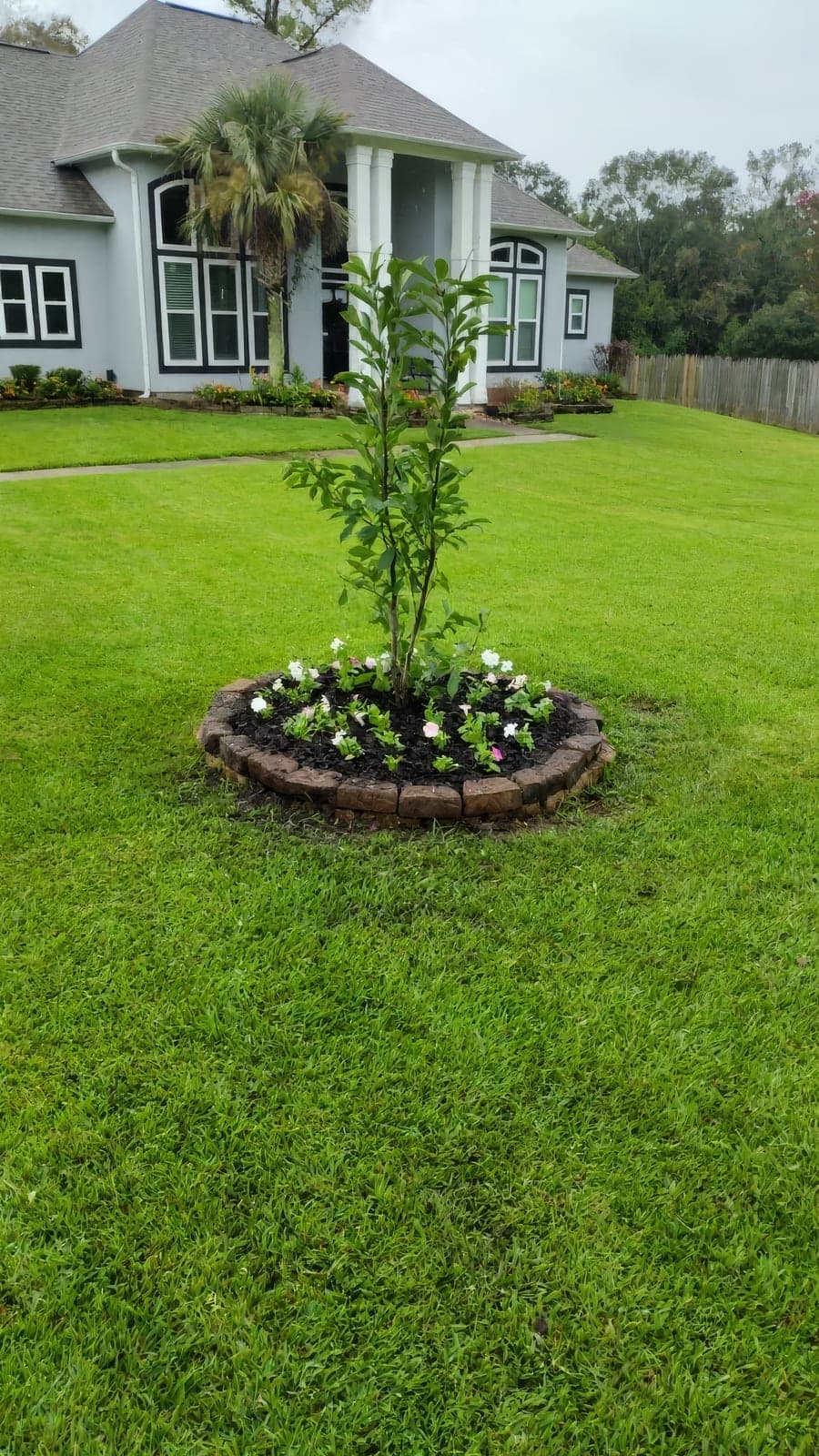
- The Structural Evergreen (The ‘Thriller’): Sweetbay Magnolia (Magnolia virginiana) Instead of a non-native that might struggle, we start with a native champion. The Sweetbay Magnolia is a smaller, more manageable cousin of the grand Southern Magnolia. It’s semi-evergreen in our climate, meaning it holds its leaves through most of the winter, providing essential structure. Its leaves have a beautiful silvery underside that shimmers in the breeze. But its real magic is its adaptability; it naturally grows in moist, boggy areas, making it perfectly suited for Baton Rouge’s often-saturated soils. In late spring and early summer, it produces creamy white, lemon-scented flowers that are a true delight. It provides height and a strong vertical element to the planting bed.
- The Vibrant Native Perennial (The ‘Filler’): Louisiana Iris (Iris giganticaerulea) Filling the middle layer is another local hero, the Louisiana Iris. This isn’t the delicate, fussy iris of other climates. This is a robust perennial that thrives in the exact conditions that cause root rot in other plants. Available in a spectrum of colors from deep purple to yellow and white, its spectacular blooms in mid-spring are a highlight of the Southern garden calendar. Crucially, after its show is over, it can handle the summer heat, often going semi-dormant, which is a natural survival mechanism. Planting them in a drift of five or seven around the base of the magnolia creates a stunning seasonal display and reinforces our commitment to using Louisiana Native Plants.
- The Textural Grass (The ‘Spiller’): Gulf Muhly (Muhlenbergia capillaris) For the final layer, we need texture and late-season interest. Gulf Muhly, also known as Muhly Grass, is an exceptional choice. This ornamental grass forms a tidy clump of fine, green foliage throughout the spring and summer. It’s incredibly drought-tolerant once established, a key trait for surviving dry spells. Its true glory, however, arrives in the fall. From October to November, it sends up a breathtaking cloud of airy, pinkish-purple flower plumes that catch the autumn light beautifully. This soft texture provides a perfect contrast to the bold leaves of the iris and the larger leaves of the magnolia, ensuring the planting combination looks thoughtfully designed all year long. The visual stream of color and texture is magnificent.
Together, this trio works in perfect harmony with the Baton Rouge environment. The magnolia anchors the design, the iris provides a spectacular spring show, and the muhly grass offers a stunning fall finale and fine texture. Each is chosen not just for its beauty, but for its ability to solve a specific local challenge, from wet soil to intense summer heat. Of course, here is a list of other plants that can be substituted based on specific site conditions, always following the same principle of structure, seasonal color, and texture.
Applying the Rule Beyond Plants: Hardscaping for a Southern Courtyard Aesthetic
A truly great landscape design integrates both Softscaping (the plants) and Hardscaping (the non-living elements). The Rule of 3 is just as powerful when applied to the materials that form the bones of your outdoor living spaces. For an authentic Baton Rouge aesthetic that complements our regional architecture, from Creole Cottage Gardens to Acadian-style homes, we recommend a trio of classic, durable materials.
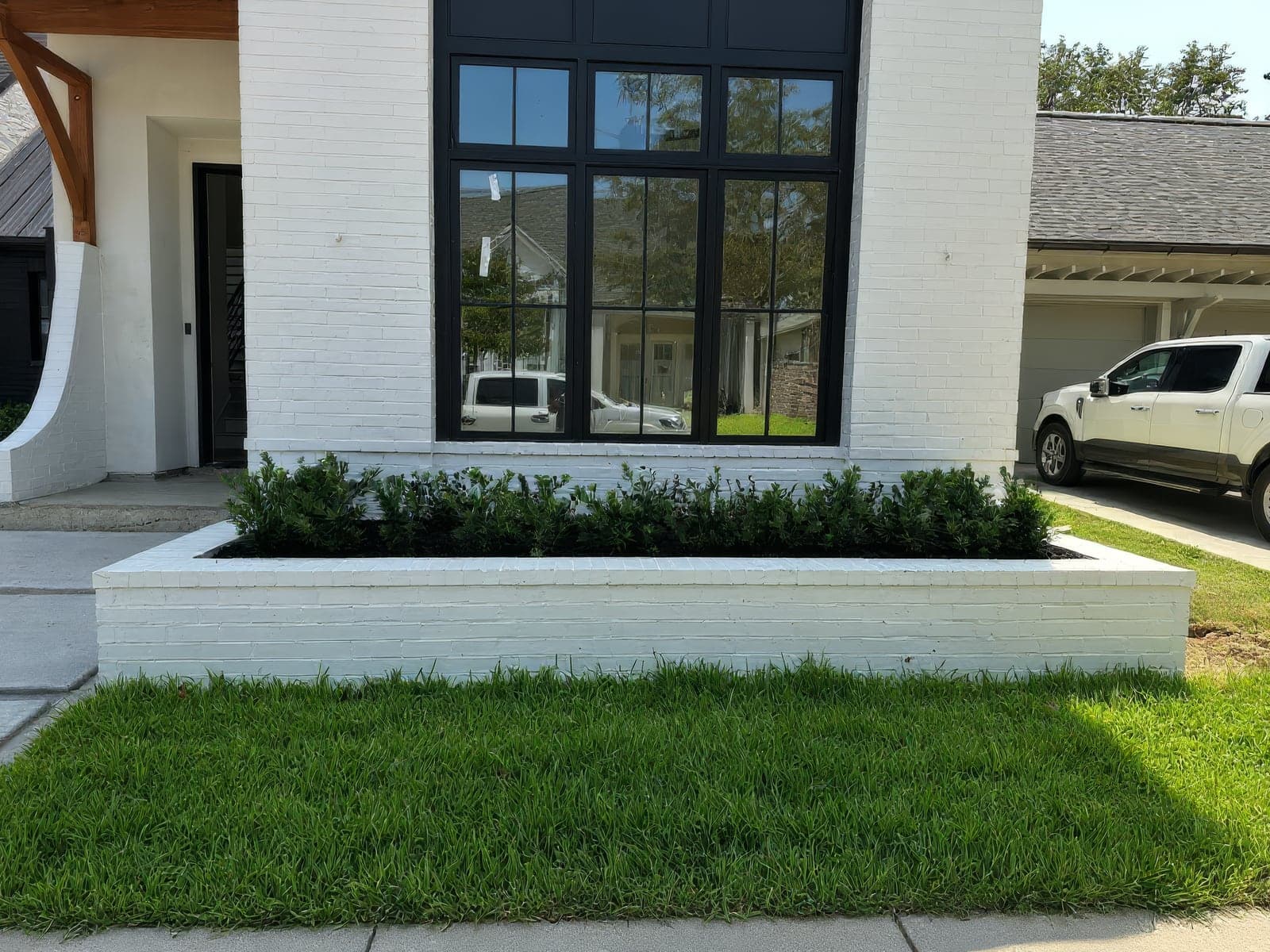
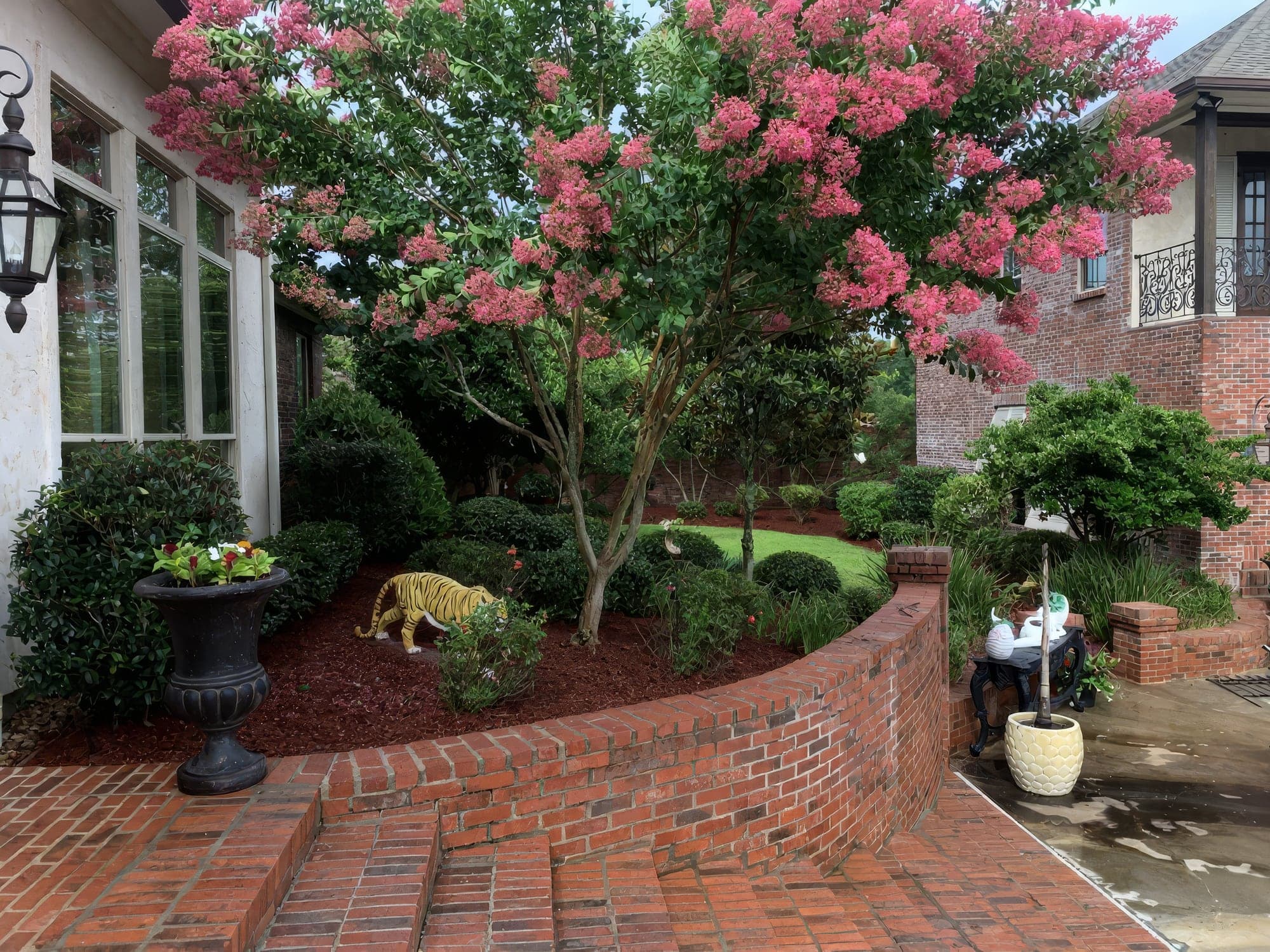
- Material 1: Aged Brick. Whether it’s genuine, reclaimed St. Joe brick or a high-quality modern equivalent, the warm, earthy tones of aged brick are quintessentially Louisiana. We use it in trios of ways: for classic garden pathways that meander through beds, for raised garden beds that improve drainage for vegetables or flowers, and as a sturdy, traditional edge for planting areas. Its texture and color connect the garden directly to the architectural heritage seen throughout neighborhoods like Spanish Town.
- Material 2: Bluestone or Flagstone Pavers. To complement the rustic warmth of brick, we introduce the cool, elegant tones of natural stone like bluestone or other types of flagstone. Used for a patio or a primary seating area, it creates a surface that feels both luxurious and permanent. The contrast between the irregular shapes of flagstone and the uniform pattern of a brick walkway creates a sophisticated layering of textures. This combination is perfect for crafting welcoming Flagstone Patios that become the heart of outdoor entertaining.
- Material 3: Dark Cypress Mulch. The final element in our hardscape trio is the unifying groundcover. We almost always recommend a dark-colored, finely shredded cypress mulch. As a local product, it’s a sustainable choice. Functionally, it excels at Mulching for Weed and Moisture Control, which is critical during our hot summers. Aesthetically, its rich, dark color provides a perfect, consistent backdrop that makes the green foliage of your plants appear more vibrant and the colors of your flowers pop. It ties the brick, the stone, and the plantings together into one cohesive picture. Even the smallest details, like using a specific type of retaining pin, the HLS-ZN model, can make a huge difference in the longevity of the installation.
This principle also extends to Container Gardening. Instead of a random assortment of pots, we advise clients to select three pots of varying heights but from the same style family (e.g., all classic terracotta or all sleek, dark gray fiberglass). Grouped together near an entrance or on a patio corner, this trio creates a powerful, intentional statement that elevates the entire space. It’s an easy DIY Landscaping Project that has a professional-level impact.
Layering for Four-Season Appeal in East Baton Rouge Parish
One of the great advantages of gardening in East Baton Rouge Parish is that our landscapes don’t have to shut down for half the year. We can, and should, have visual interest in every season. The Rule of 3 is our primary tool for achieving this, ensuring your garden has structure in winter, explosive blooms in spring, lush texture in summer, and rich color in fall. This requires a thoughtful Seasonal Planting Guide approach, layering trios of plants with different peak seasons.
Winter Structure: The Bones of the Garden
Winter is when the underlying design of your landscape is most visible. We focus on Evergreen Shrubs and trees to provide a strong framework. A classic winter trio might include: 1) A cluster of three elegant Camellias, which offer glossy evergreen leaves and beautiful late-winter blooms. 2) A mass planting of hardy, low-maintenance Holly Fern to provide lush, green texture at the ground level. 3) A specimen Sweet Olive (Osmanthus), a fantastic evergreen shrub whose tiny white flowers produce an intoxicatingly fragrant aroma on mild winter days. This combination ensures your garden never looks bare or desolate.
Spring Celebration: The Blooming Season
Spring in Baton Rouge is a riot of color. Our goal is to orchestrate this celebration. A perfect spring trio could be: 1) A group of three iconic Azaleas, particularly reliable varieties like the Encore Azaleas that may even rebloom. 2) Drifts of Louisiana Phlox, a native groundcover that creates a carpet of purple or pink flowers. 3) The emerging, bold foliage of Hostas for Shade Gardens, which provide a beautiful textural contrast to the fine flowers of the phlox and azaleas. This layering ensures color at multiple levels.
Summer Survival: Lushness and Heat Tolerance
Summer is about survival and celebrating plants that thrive in the heat. A sun-loving summer trio we often recommend includes: 1) A multi-trunk Crepe Myrtle, the quintessential summer-flowering tree of the South. 2) A mass planting of five or seven Lantana for Full Sun, a workhorse perennial that blooms relentlessly through the worst of the heat and humidity, attracting butterflies. 3) Bold clumps of Agapanthus (Lily of the Nile), which send up beautiful spheres of blue or white flowers on tall stalks, providing a cool color in the summer heat. These are all Heat Tolerant Perennials that won’t quit. A properly designed landscape offers more than beauty; it provides tangible relief from the heat. In fact, a single, isolated tree can transpire hundreds of liters of water a day, which provides a cooling effect equivalent to five average room air conditioners running for 20 hoursaccording to extensive research. This demonstrates how smart landscaping is a key part of a sustainable home.
Fall Finale: Color and Texture
While we may not have the dramatic fall foliage of northern climates, we can create a spectacular autumn display with the right plants. A fantastic fall trio features: 1) The aforementioned Gulf Muhly grass, which is the undisputed star of the fall garden with its pink haze. 2) A Japanese Maple, whose delicate leaves often turn brilliant shades of red, orange, or gold. 3) The late-season blooms of an Abelia or the continued performance of fall-blooming salvias. This focus on texture and subtle color shifts provides a graceful transition into winter.
Planning a landscape with this level of detail and foresight is what sets a professional design apart. It’s this commitment to year-round beauty that our clients appreciate most. As one homeowner in the Bocage area told us, “We couldn’t ask for better workers. They always go a step beyond what I expect and consistently provide excellent service.” That “step beyond” is the strategic thinking that ensures their garden is a source of joy every single day of the year.
The Rule of 3 as an Antidote to the ‘Overstuffed’ Garden
It’s an understandable impulse. You visit a fantastic local nursery like Clegg’s Nursery or Louisiana Nursery, and you’re surrounded by thousands of beautiful plants. The temptation is to buy one of this, one of that, and one of everything else that catches your eye. The result, all too often, is a garden that lacks cohesion and feels cluttered. It’s a collection of individual specimens rather than a unified, intentional landscape. This approach often leads to more maintenance, not less, as plants compete for light, water, and nutrients.
The Rule of 3 is a powerful discipline that prevents this common mistake. By committing to planting in groups, you automatically create repetition, which is the key to a unified design. A sweep of five Black-Eyed Susans makes a much stronger visual statement than five different types of yellow flowers scattered randomly. This repetition creates a rhythm that guides the eye through the landscape, leading to a sense of calm and order. It allows you to appreciate the unique qualities of each plant group because it has the space to stand out. It’s a perfect strategy for Curb Appeal Enhancement because it creates a look that is both lush and tidy from the street view. More plants, more color, more texture, more enjoyment, a m4 m4 m4 m4 approach to maximizing impact through intentional design.
Nuanced Comparison: Finding the Right Approach for Your Property
Understanding the different ways the “Rule of 3” can be interpreted is key to making an informed decision for your own landscape. It’s not just one concept, but a spectrum of application from a simple aesthetic guideline to a complex, climate-specific strategy. Let’s compare the approaches to see where the real value lies for a Baton Rouge homeowner.
General Aesthetic ‘Rule of 3’
- Pros: This is the basic, widely-known version of the rule. It’s easy to understand and apply on a small scale. It’s a great starting point for beginners and can instantly improve the look of a container grouping or a small flower bed. It provides a simple formula to avoid the “two-by-two” symmetrical look.
- Cons: This approach is purely visual. It doesn’t account for the most critical factors for success in our region: climate suitability, soil type, water needs, or long-term plant health. You could follow the aesthetic rule perfectly by planting a trio of tulips, but they would fail spectacularly in our heat and humidity. It’s design in a vacuum.
Climate-Specific ‘Rule of 3’ for Resilience (The Hernandez Lawnscape Method)
- Pros: This method integrates the aesthetic principle with deep horticultural science and local experience. Every trio is selected for its ability to thrive in USDA Hardiness Zone 9a, handle our rainfall patterns, and resist common local pests and diseases. This leads to dramatically higher Long-term sustainability and plant survival rates, protecting your investment. It creates a beautiful, low-maintenance landscape that looks better year after year as it matures. The key to this is understanding the vs (versus) battle between what a plant needs and what our climate provides.
- Cons: This approach requires significant upfront planning and deep local knowledge. It’s not something you can easily replicate by reading a generic gardening blog. It requires a professional understanding of plant combinations, soil science, and microclimates within your own yard.
Standard Landscaping vs. Baton Rouge-Adapted Landscaping
This comparison gets to the heart of why local expertise is non-negotiable. Standard, “one-size-fits-all” landscaping plans often fail here because they don’t address our unique challenges head-on.
- Standard Landscaping: Might specify plants that require well-drained, loamy soil, which is the opposite of the heavy, dense Gumbo Clay Soil found in much of Baton Rouge. This leads to “wet feet” and root rot. It might not incorporate proper grading or drainage solutions, leading to standing water after a typical summer thunderstorm. Pest and Fungal Disease Control becomes a constant, reactive battle.
- Baton Rouge-Adapted Landscaping: This approach begins below the ground. We prioritize Planting Bed Preparation, often amending the soil heavily with organic matter to improve its structure. We design and implement effective Soil Drainage Solutions, from simple grading to complex French Drain Installation, because we know water management is paramount. Our plant selection is guided by resources like the LSU AgCenter, favoring natives and proven performers. This proactive approach is in line with the state’s own priorities. The practice of landscape architecture in Louisiana is regulated by state law to ‘safeguard life, health, and property, and to promote the public welfare,’ which includes addressing inherent land problems like drainage and floodingas outlined by the state’s own licensure board. We take this responsibility seriously in every design we create.
Key Factors for Your Baton Rouge Landscaping Decision
When you’re ready to invest in your outdoor space, the choices can feel overwhelming. To cut through the noise, we believe homeowners should focus on four critical factors. These are the pillars that support a successful and enjoyable landscape for years to come.
Year-round resilience to Louisiana’s heat and humidity
This is the number one factor. A landscape that only looks good for three months is a failed landscape. Resilience comes from choosing the right plants, like native Live Oak Trees and tough-as-nails Gardenias, that are genetically adapted to our conditions. It also comes from smart design, like using proper spacing to promote air circulation, which helps prevent fungal diseases that thrive in our humidity. A well-designed landscape should be a sanctuary, not another source of stress.
Aesthetic value and the creation of a personal ‘retreat’
Your yard should be an extension of your home, a place where you can relax, entertain, and connect with nature. This is where the artistry of design comes in. Using principles like the Rule of 3, Color Theory for Gardens, and careful consideration of Plant Texture and Form, we work to create a space that reflects your personal style. Whether you dream of a lush, private Backyard Garden Design or a show-stopping Front Yard Landscaping plan that boosts your home’s value, the goal is to create a space that brings you daily joy. This might involve creating “rooms” with strategically placed plantings, adding the soothing sound of a water feature, or installing Landscape Lighting to extend the enjoyment of your retreat into the evening.
Long-term sustainability and plant survival rates
A beautiful design is meaningless if the plants don’t survive. Sustainability in landscaping means putting the right plant in the right place. It means understanding the sun exposure, soil type, and moisture levels of every corner of your property. By doing this homework upfront, we drastically reduce the need for replacements, intensive irrigation (though Drip Irrigation Systems are often a smart, water-wise investment), and chemical interventions. A sustainable landscape is better for the environment and for your wallet. It’s a very (ve) important consideration for modern homeowners.
Professional expertise in local climate challenges like drainage and erosion
This is the technical foundation upon which everything else is built. In a city like Baton Rouge, which is no stranger to heavy rainfall and is part of a region concerned with Hurricane Resistant Landscaping, water management is not an optional extra; it is essential. A professional landscape designer with local experience will assess your property’s topography and soil and build in the necessary drainage solutions from day one. This could involve creating subtle swales, installing French drains, or building elegant Retaining Walls that double as beautiful landscape features. This expertise prevents costly problems like foundation damage, soil erosion, and drowned, wasted plants.
Frequently Asked Questions About Landscape Design Principles
We believe an educated client is our best partner. To help you in your planning process, we’ve answered some of the most common questions we hear about the core concepts of landscape design.
What is the 70/30 rule in gardening?
The 70/30 rule is a guideline for balancing evergreen structure with seasonal color. It suggests that roughly 70% of your planting material should be structural plants, evergreen shrubs and trees that provide a consistent “framework” or “bones” for your garden all year long. The remaining 30% is dedicated to seasonal or perennial plants that provide pops of color and interest that come and go, like spring bulbs, summer annuals, and fall-blooming perennials. This rule works beautifully in conjunction with the Rule of 3. For example, your 70% structure might include a trio of dwarf hollies, while your 30% seasonal color might be a drift of seven coneflowers planted in front of them.
What is the golden ratio in landscaping?
The golden ratio (approximately 1:1.618) is a mathematical proportion found throughout nature that humans find inherently beautiful and balanced. In landscaping, it can be used as a more advanced design tool to create pleasing proportions. For example, the ideal length and width of a patio or a raised garden bed might conform to this ratio. It can also guide the relationship between elements; the height of a pergola could have a golden ratio relationship to the width of the patio it covers. While the Rule of 3 is a simple, effective tool for grouping, the golden ratio is a more nuanced principle that can help guide the scale and proportion of the entire landscape design, ensuring all the pieces fit together harmoniously.
What is an example of the rule of three in landscaping?
A perfect, practical example is our ‘Baton Rouge Trio’ mentioned earlier: a single Sweetbay Magnolia (the tall “thriller”), a grouping of five Louisiana Irises around it (the “filler”), and a sweep of textural Gulf Muhly grass in front (the “spiller”). A simpler example you might see in a foundation planting is a gentle, triangular grouping of three ‘Autumn Embers’ Encore Azaleas at the corner of a house. This creates a much more natural and appealing look than planting two, or lining them up in a straight row. This type of design is what our team, including the junior (jr) designer, learns from day one.
Making the Right Choice for Your Needs
Ultimately, the best landscaping approach is not one-size-fits-all. It depends entirely on your property, your lifestyle, and your goals. To help you find the right path, here is our tailored advice for three common types of Baton Rouge homeowners we meet.
For the New Baton Rouge Homeowner
If you’ve recently moved to the area, welcome! You’ve likely discovered that gardening here is a different ballgame. You’re probably unfamiliar with the challenges of our gumbo clay soil, the sheer intensity of the summer sun and humidity, and which plants will actually thrive. Our advice is to start with a professional consultation. Avoid the costly and heartbreaking cycle of trial-and-error. Investing in an expert plan upfront will save you money, time, and frustration, and will set your new property on a course for beautiful, sustainable success from the very beginning. We can help you understand the unique microclimates of your yard and create a foundational plan that you can implement in phases or all at once.
For the Frustrated DIY Gardener
You’re the person who loves to be outside, who enjoys getting your hands dirty, but who has been fighting a losing battle against the climate. You’ve planted things that looked great at the nursery only to watch them melt in July or rot in a rainy May. We understand your frustration. The problem likely isn’t your effort; it’s the lack of a climate-specific strategy. A professionally designed plan based on the principles we’ve discussed, the right plants, grouped for resilience and visual appeal using the Rule of 3, with proper soil preparation and drainage, can be the framework you need to finally succeed. It can turn your hard work into lasting results. It’s this kind of transformative result that leads to reviews like this one from a client in Shenandoah: “I could not be more pleased with Hernandez Lawnscape. Excellent service all around…5 stars!”
For the Outdoor Entertainer
Your goal is to create a beautiful, functional, and impressive space for hosting family and friends. You need more than just pretty plants; you need a landscape that performs. For you, the Rule of 3 is about creating flow and defining spaces. We can use groupings of plants to frame a stunning view, to screen an unsightly utility box, or to create a sense of intimacy around a patio or pool deck. We focus on durable hardscaping that can handle foot traffic and year-round beauty that provides a perfect backdrop for every graduation party, crawfish boil, and holiday gathering. The plan we create will prioritize low-maintenance, high-impact plantings so you can spend your time enjoying your guests, not worrying about your garden.
The Rule of 3, when elevated from a simple aesthetic trick to a comprehensive, climate-focused strategy, is the key to unlocking your property’s true potential. At Hernandez Lawnscape, our deep-rooted knowledge of Baton Rouge’s unique environment allows us to design and build landscapes that are not only beautiful on day one, but that grow healthier, stronger, and more resilient for years to come. It’s an investment in your home, your quality of life, and your own personal Southern retreat.
Ultimately, the best choice depends on your unique situation and vision. For a personalized assessment of your property and a plan that thrives in our unique Southern climate, contact the Hernandez Lawnscape team today for a complimentary consultation. Let us help you create the beautiful, lasting outdoor space you deserve.
Leave us your contact information to receive more information
FOLLOW ME
Latest publications
Related service
Landscaping Baton Rouge: Design, Renovation and Installation
Landscape design and renovation in Baton Rouge and Livingston Parish.
Written by Gerardo Hernandez, owner and founder of Hernandez Lawnscape
Gerardo Hernandez founded Hernandez Lawnscape in Denham Springs in 2013 with a mower and a trailer. He still walks every job, draws the landscape designs himself in Morpholio Trace, and diagnoses drainage the practical way: find the last spot to dry, trench from there, and run pipe at a steady fall to a real discharge point.