Skip to content
Hernandez Lawnscape logo
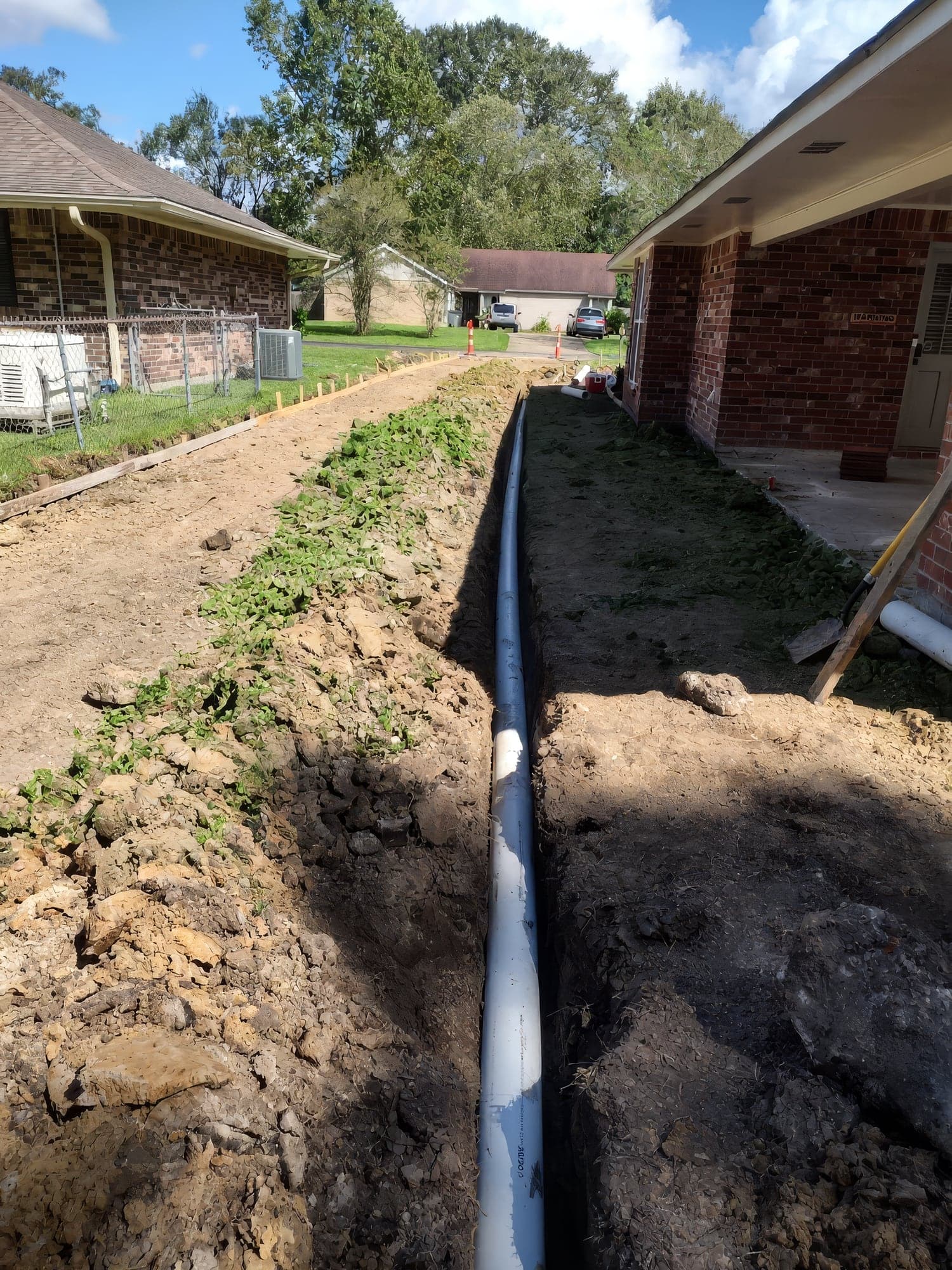
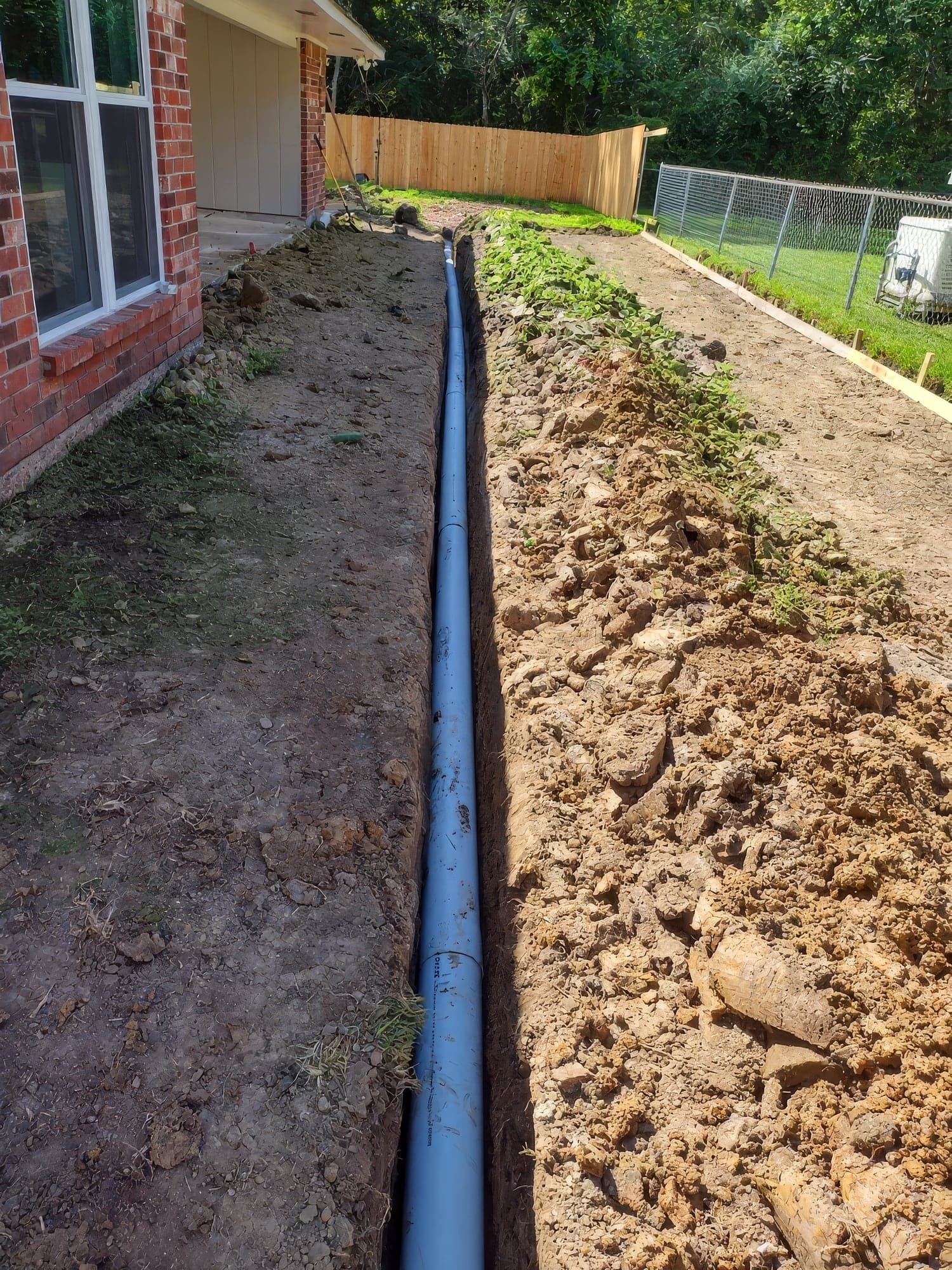
A six-inch PVC drainage pipe laid in a long open trench between two brick homes

Drainage and sprinklers

Drainage Baton Rouge: French Drains and Yard Drainage That Actually Drain

Water runs downhill. If your yard does not have a way out, it is finding a way in. We start at the last spot in the yard to dry out, trench from there, and slope the pipe to a real discharge point. Gravity first, pumps last.

Show what's underground

How a Hernandez drain is built

Most drainage quotes are a number. Ours is a drawing. This is what goes in the trench and why it keeps working when the pump-based systems down the street have stopped.

  1. 1

    Find the last spot to dry

    That is the low point. The system starts there, not where the puddle is easiest to reach.

  2. 2

    Trench toward a real exit

    The street, a ditch or a swale that is lower than the start. Pipe runs at a 2 percent fall so water never sits in the line.

  3. 3

    Tie in the downspouts

    Roof water lands at your foundation otherwise. Solid pipe carries it into the same line.

  4. 4

    Restore the lawn

    Sod goes back over the trench. In a month you cannot find where the crew was.

NDS Pro Alliance Member badge

NDS certified drainage contractor. Gerardo earned the NDS Professional Drainage Contractor certification in September 2026, on top of the state licenses the company already holds.

Cutaway of a French drainSod and topsoil over a trench filled with washed gravel wrapped in filter fabric, a perforated pipe at the bottom sloped two percent toward the street, and a downspout tied into the line.CURB2% FALL, 1 TO 2 IN PER 10 FTDOWNSPOUT TIED INWASHED GRAVEL + FILTER FABRICTO THE STREETSOD RESTORED

Yard Drainage Systems in Baton Rouge, LA

Baton Rouge gets about 60 inches of rain a year, far above the national average, and most of our yards sit on flat, heavy soil that holds it. Standing water after a storm is not bad luck. It is water with no way out. A yard drainage system gives it one: a low point to collect in, a pipe to travel through, and a discharge point that is lower than where it started.

We install French drains, catch basins, downspout tie-ins and full drainage systems for homes across Baton Rouge, Denham Springs and Livingston Parish. Every system starts the same way, with a walk through the yard after we ask you one question: where is the last spot to dry out after rain?

How We Diagnose a Drainage Problem

The low spot is where the system starts, not where the puddle is easiest to reach. From there we look for an exit that is lower than the start, usually the street, a ditch or a swale. If we can get a natural fall from one to the other, gravity does the work for the life of the system. We run pipe at about a 2 percent fall, one to two inches of drop for every ten feet, so water never sits in the line.

A lot of drainage calls in newer subdivisions come down to grading. Final grading gets rushed on a new build, and then a neighbor raises a lot, pours a slab or adds a pool. The path your water used to take is gone. Your yard did not change. The yard next door did. We find the new low spot and give the water a new way out.

French Drain Systems

A French drain is a trench with a perforated pipe at the bottom, surrounded by washed gravel and wrapped in filter fabric so soil cannot clog it. Water in the ground seeps into the gravel, drops into the pipe and travels downhill to the exit. It is the right fix for a side yard between two houses, a soggy strip along a fence, or a backyard that stays wet for days.

Where the problem is roof water rather than ground water, the fix is different. Downspouts by themselves dump the whole roof at your foundation. We tie them into solid pipe that carries the water out to the street, because gutters without drainage to a discharge point just move the problem to your slab.

Catch Basins, Pipe Size and Pumps

Catch basins collect surface water in a patio corner or a low spot in the lawn and feed it into the line. Pipe size follows the water: a small side yard runs on four inch pipe, and a yard taking two roofs and a patio may need six inch pipe so the line keeps up in a downpour.

A pump is the last resort. It is only necessary when there is no natural slope from the low spot to any exit. Pumps work, but they stop when the power goes out, which in a Louisiana storm is exactly when you need them. If gravity can do the job, we will tell you that you do not need a pump, even when someone else has already quoted you one.

Protecting Your Plants and Your Foundation

Drainage is not only about the lawn. Beds that hold water rot roots, and water that sits against a slab finds its way in. A drainage system that carries water away from the house protects the beds, the sod and the foundation at the same time, which is why we grade and drain before we plant anything on a renovation.

What a Drainage Job Looks Like

  1. A walk through the yard to find the low spot and the exit.
  2. An itemized quote by email with the pipe sizes, the run and the discharge point spelled out.
  3. Trenching, often by hand where the loader cannot go, and pipe laid at a steady fall.
  4. Downspouts tied in, gravel and fabric placed, catch basins set.
  5. Sod put back over the trench. In a few weeks you cannot tell where the crew was.

Drainage is one of the three things we warranty, along with irrigation and artificial turf, because we control every part of the installation. After the next hard rain, watch the low spot. It should be dry within hours.

From our jobs
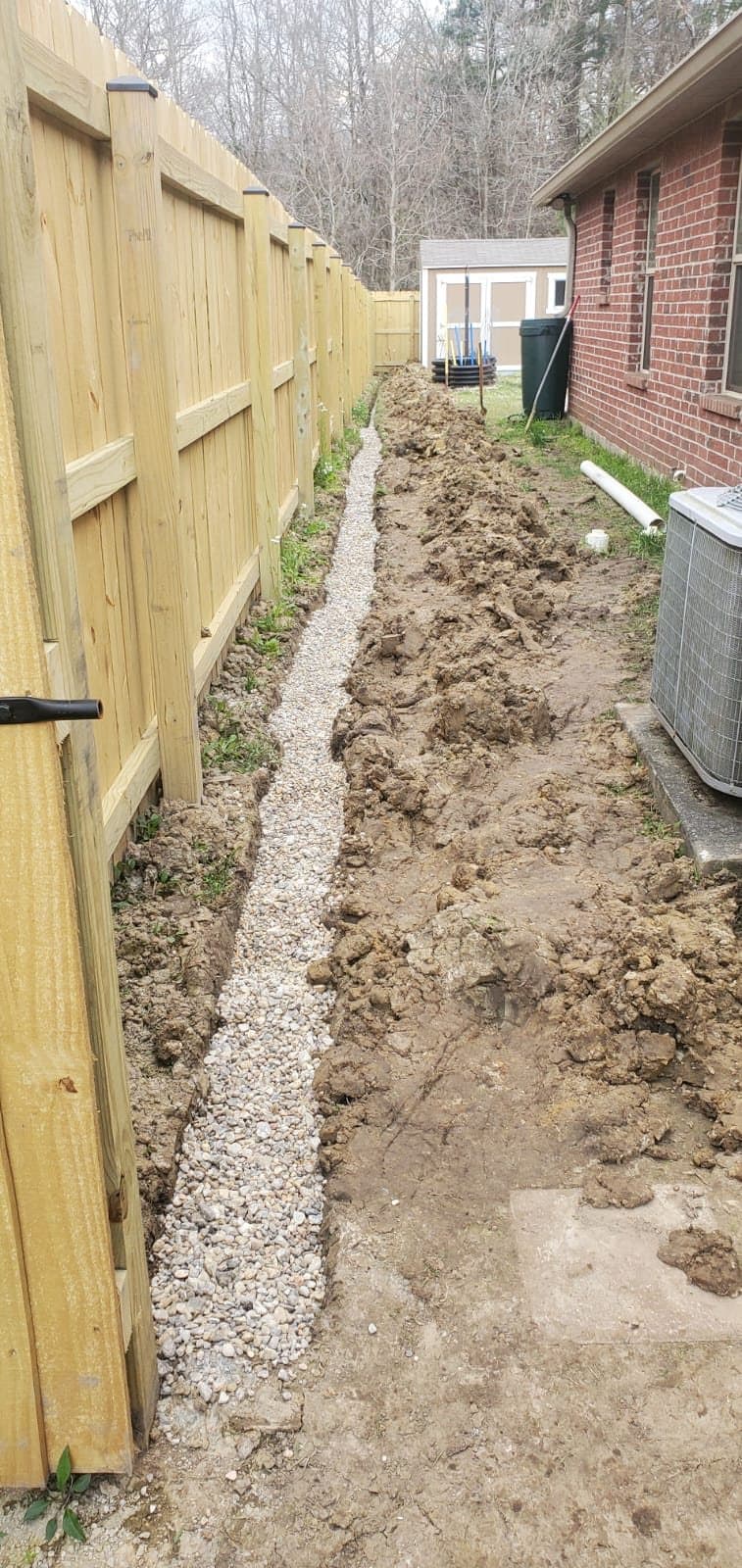
  • A French drain trench filled with washed gravel along a wooden privacy fence
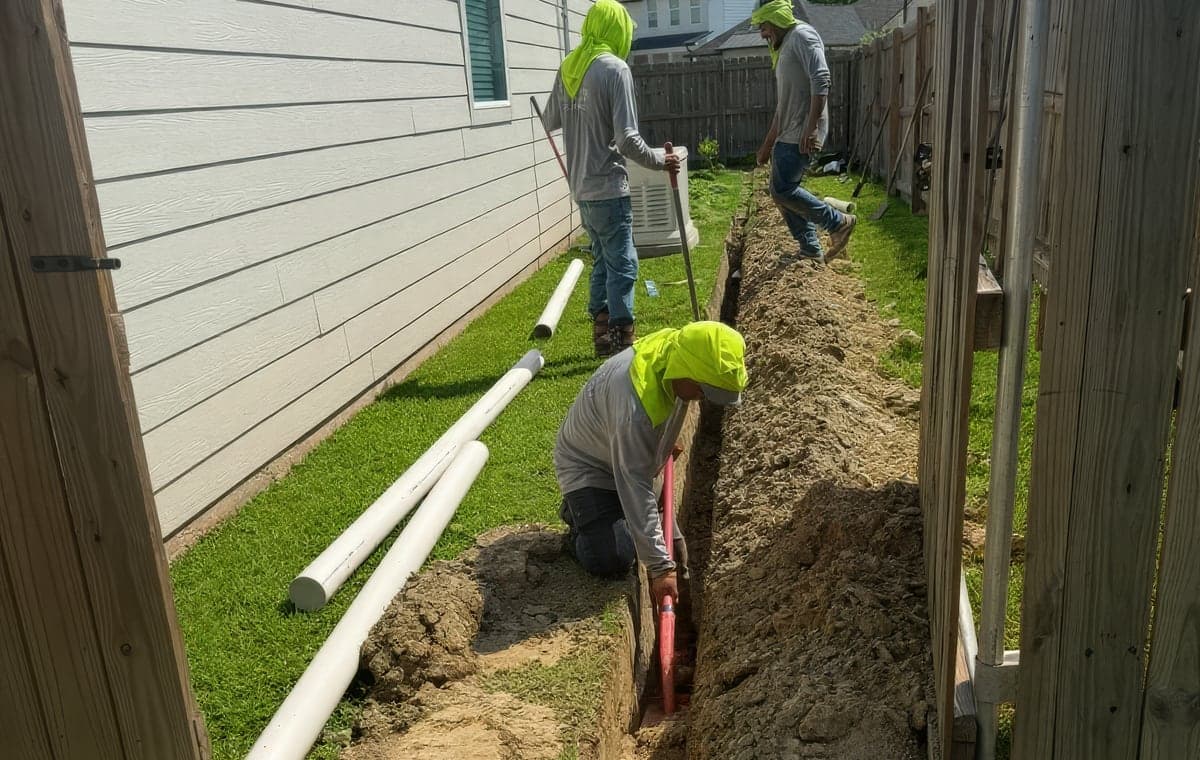
  • Three crew members installing PVC drainage pipe in a trench along a side yard
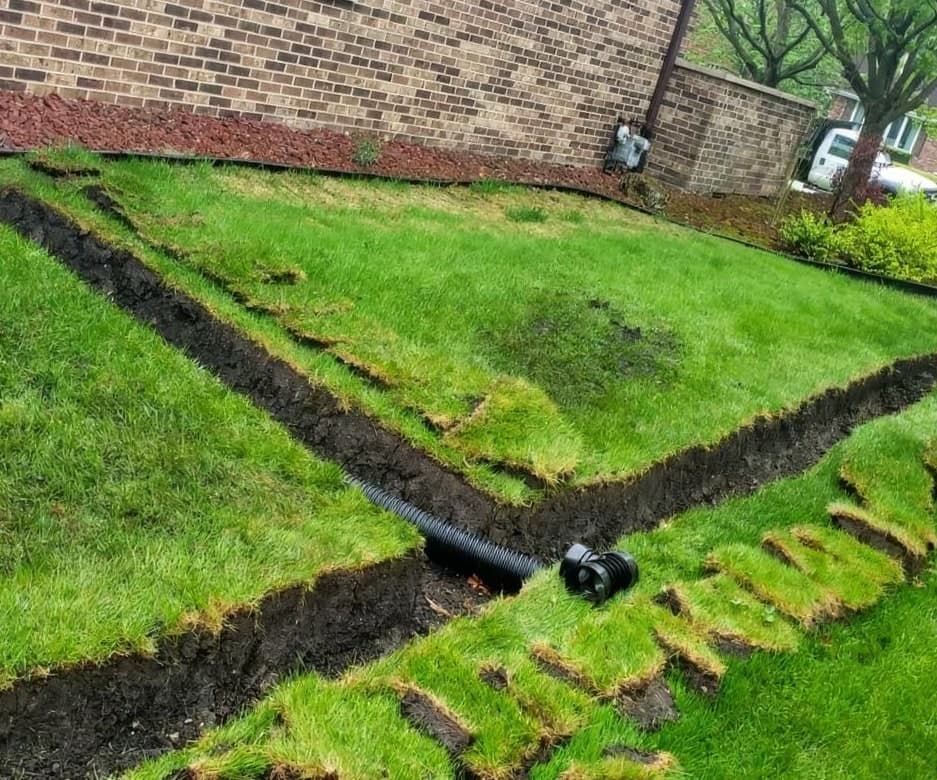
  • A trench cut through a front lawn with sod strips peeled back and corrugated drain pipe laid out
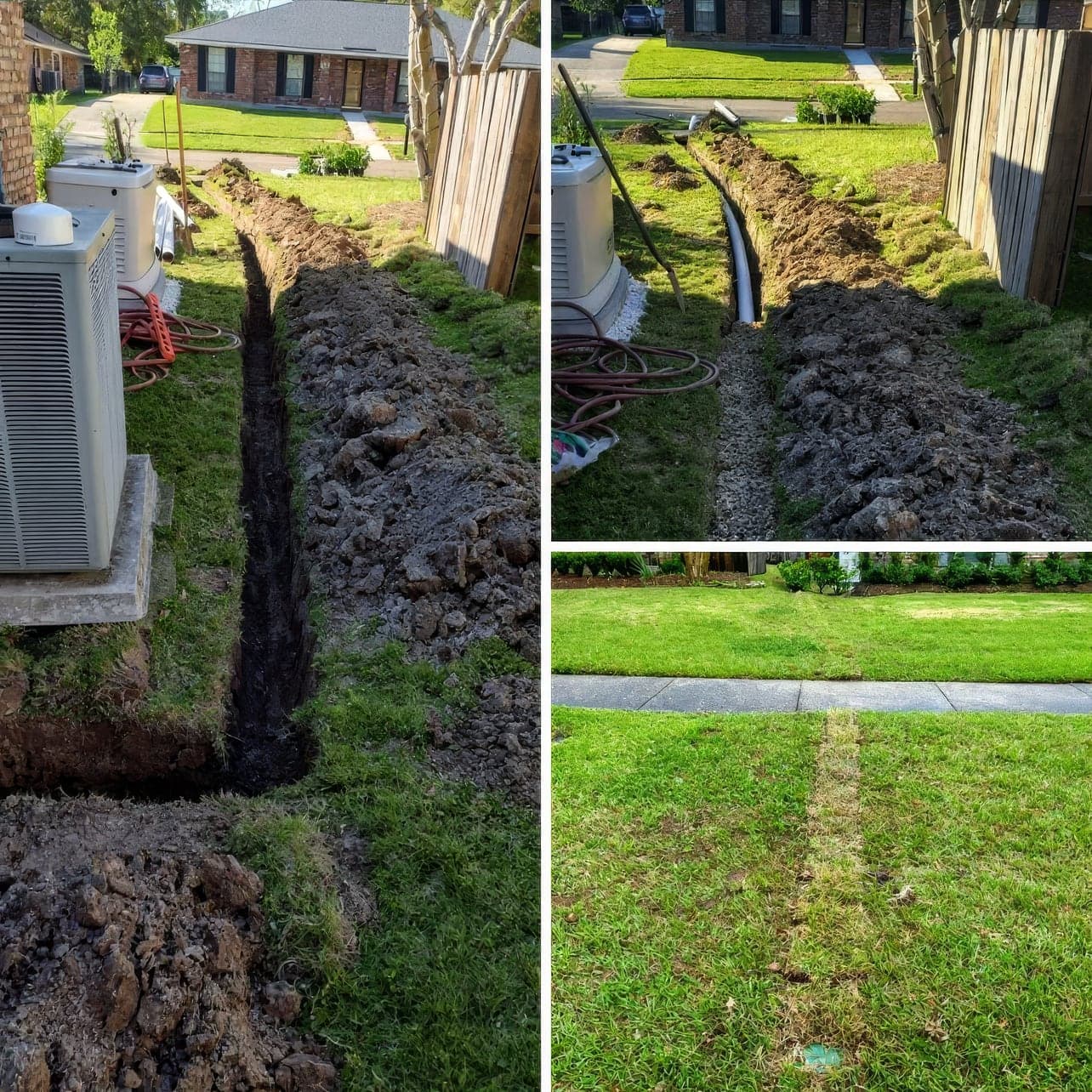
  • Three photos of a drainage job: the open trench beside an HVAC unit, the pipe laid in, and the lawn restored
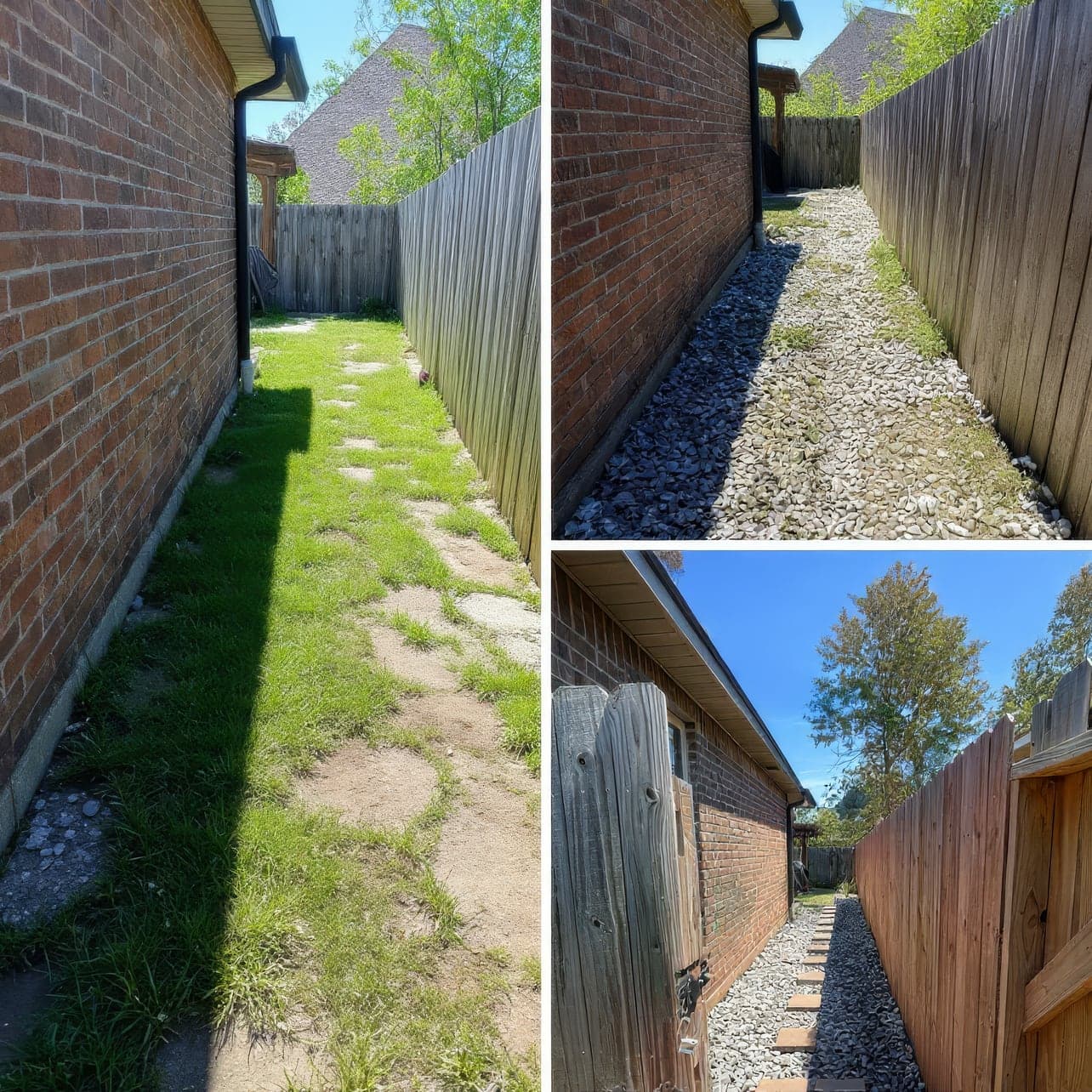
  • Before and after of a waterlogged side yard with broken flagstones, rebuilt with gravel drainage and stepping stones

Real yards, real rain

Drainage projects we photographed

All recent projects
  • A gray PVC drainage pipe laid in a trench beside a brick home

    Drainage

    French Drain Rescue

    Side yards that held water for days after rain, trenched, piped at a 2 percent fall and restored so the lawn shows no scar.

4.9 stars on 191 Google reviews

What customers say about our drainage work

Read all reviews
  • Hernandez Landscaping transformed my old worn out beds into a masterpiece. After years of trying to maintain on my own, i eventually gave up and turned it over to the professionals. I went with them on a recommendation from a big business here in Baton Rouge...

    Craig MasonGoogle, 2026/09
  • Contracted with Hernandez Landscape LLC to install over 200 feet of French Drains in my back yard in Lake at White Oak and we could not be more pleased with the quality of their work and the professionalism of their crew. The crew dug the trenches by hand,...

    Ron RouillierGoogle, 2025/06
  • Hernandez Lawnscape installed my French drains about three weeks ago and it has made a huge difference with sitting water. The water drains almost immediately! The team was responsive, prompt and made sure to clean up when the work was done. I highly...

    Brittany CollinsGoogle, 2025/09

Questions

Drainage questions, answered straight

The questions homeowners ask on the assessment, with the answers Gerardo gives.

How does Hernandez Lawnscape decide where a drain goes?
Gerardo asks the homeowner one question first: where is the last part of the yard to dry out after rain? That is the low point, and that is where the system starts. From there the crew trenches toward a discharge point that is lower than the start, usually the street or a ditch, so the pipe can run at a natural slope.
What slope does a yard drain need?
We run drainage pipe at about a 2 percent fall, which is one to two inches of drop for every ten feet of pipe. Anything flatter holds water in the line; anything steeper wastes depth you may need at the discharge end.
Do I need a pump?
Only when there is no natural slope from the low spot to a discharge point. Pumps work, but they stop when the power goes out, which in a Louisiana storm is exactly when you need them. If we can get gravity to do the job, we will tell you that you do not need a pump.
Why does my new-build yard flood when it never did before?
New subdivisions often skip careful final grading, and a neighbor's new slab, raised lot or pool can block the path water used to take. A yard that drained fine three years ago can start holding water because of what was built next door.
Are gutters enough?
Downspouts by themselves bring all the roof water to one spot at your foundation. Gutters without a drainage line that carries the water out to the street or a ditch can create a bigger problem than they solve. We tie downspouts into the drainage system so the water actually leaves.
Is drainage work warrantied?
Yes. Drainage, irrigation and artificial turf are the three things we warranty, because we control every part of the installation.
What are the most common drainage system services offered in Baton Rouge, LA?
In Baton Rouge, LA, our company offers a comprehensive range of drainage system services. This includes installation, maintenance, and repair of residential and commercial drainage systems. We specialize in gutter and downspout services, French drains, surface drainage solutions, and subsurface drainage systems. Our team is equipped to handle projects of all sizes, ensuring effective water management for your property.
How does Hernandez Lawnscape ensure effective stormwater management in Baton Rouge's drainage systems?
At Hernandez Lawnscape, we prioritize effective stormwater management in Baton Rouge by implementing advanced drainage solutions tailored to our unique climate and geography. Our approach includes detailed site assessments, the use of high-quality materials, and installation of systems like retention basins and permeable paving. We ensure compliance with local regulations and focus on creating systems that effectively manage runoff, prevent flooding, and protect water quality.
What are the typical costs for residential drainage system installation in Baton Rouge?
The cost of residential drainage system installation in Baton Rouge varies based on several factors, including the size of your property, the type of system required, and the complexity of the installation. On average, homeowners can expect to spend anywhere from a few hundred to several thousand dollars. We provide detailed, transparent quotes after a comprehensive evaluation of your specific needs to ensure you get the most cost-effective solution.
Can Hernandez Lawnscape provide eco-friendly drainage solutions in Baton Rouge?
Absolutely! At Hernandez Lawnscape, we are committed to offering eco-friendly drainage solutions in Baton Rouge. Our green solutions include rain gardens, bioswales, and the use of environmentally sustainable materials. These systems not only manage water effectively but also contribute to groundwater replenishment and reduce the environmental impact. We believe in protecting our community’s natural resources while offering efficient drainage solutions.
How does Hernandez Lawnscape address emergency drainage system repairs in Baton Rouge?
For emergency drainage system repairs in Baton Rouge, Hernandez Lawnscape offers prompt and reliable services. Our emergency response team is available 24/7 to address critical issues like severe clogs, system backups, or flood risks. We understand the urgency of these situations and strive to provide quick, efficient, and long-lasting repairs to ensure your property is safe and your system is functioning optimally.

Standing water after every rain? Let's find where it should go.

Tell us where the water stands or what you have in mind. We come out, walk the yard with you, and tell you straight what it needs.

Get an estimate Call or text (225) 347-9540

Mon to Fri 7am to 7pm, Sat 8am to 3pm, Sun closed