Landscaping
What Are the Six Rules of Landscape Design in Baton Rouge?
The six foundational rules of landscape design, balance, focalization, rhythm, unity, proportion, and simplicity, provide a universal framework.
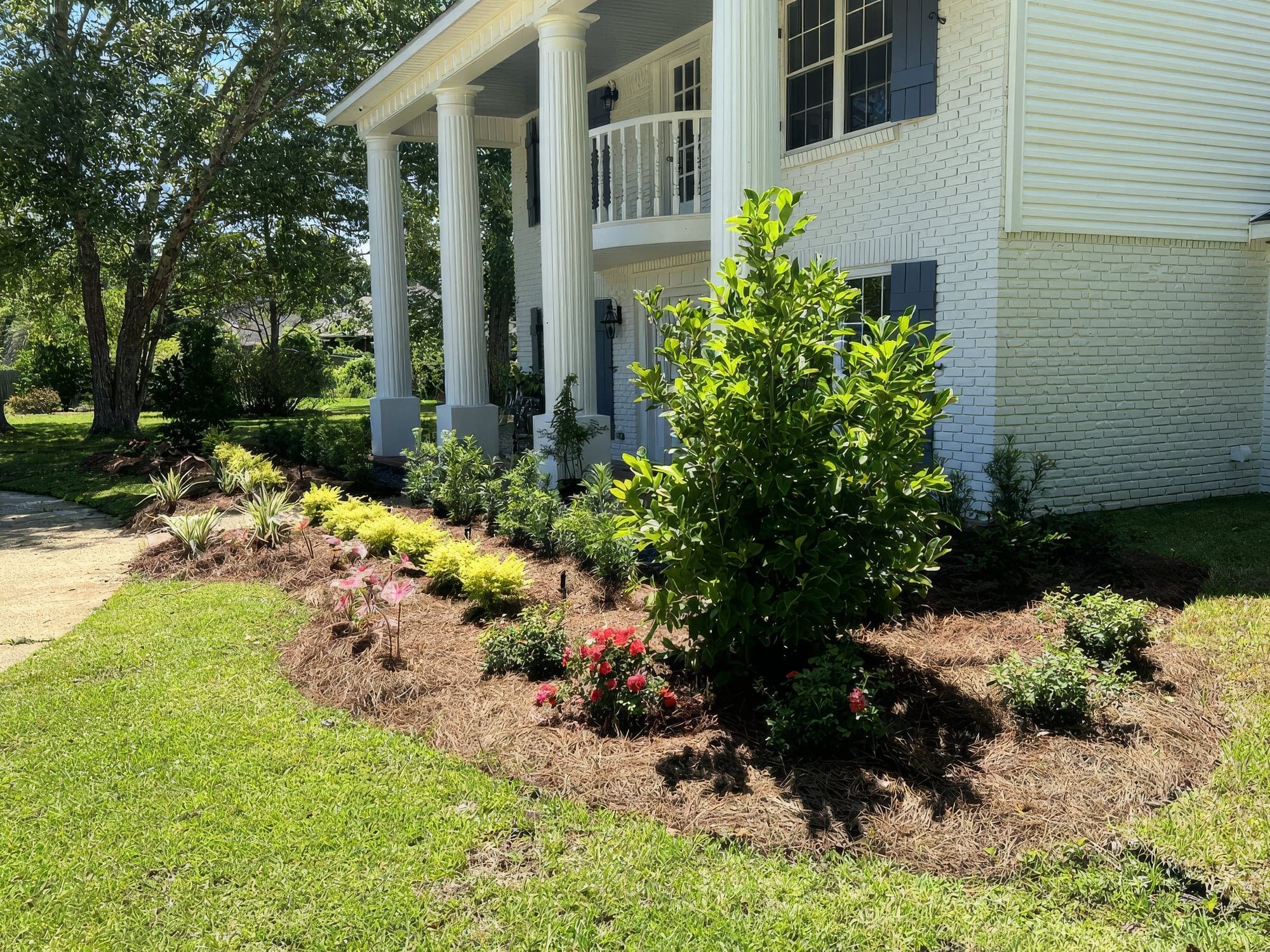
The six foundational rules of landscape design, balance, focalization, rhythm, unity, proportion, and simplicity, provide a universal framework. However, successful landscaping in Baton Rouge requires reinterpreting these rules to master our specific subtropical challenges, from unforgiving clay soil and extreme humidity to hurricane resilience and the need for functional outdoor living.
Why Standard Landscape Design Rules Fall Short in Baton Rouge, LA
If you’ve ever picked up a generic gardening book or browsed a national design website, you’ve likely encountered the classic principles of landscape design. They speak of creating visual balance with symmetrical plantings, using a colorful pot as a focal point, and repeating plant forms to achieve unity. In many parts of the country, this advice is sound. In Baton Rouge, it’s an incomplete story, a recipe for frustration, wasted money, and a yard that fights you every step of the way.
The truth is, our environment in East Baton Rouge Parish is fundamentally different. We live and garden in a humid subtropical climate, classified as USDA Hardiness Zone 9a, a world away from the mild, loamy-soil ideals often depicted in those guides. Applying one-size-fits-all rules here without significant local adaptation is like trying to navigate the Mississippi River with a map of the Thames. You’ll eventually run aground.
At Hernandez Lawnscape, with over two decades of hands-on experience shaping properties from the stately lawns of the University Club to the cozy backyards in Mid City, we’ve learned that our local challenges are not obstacles to be avoided, but rather the very elements that should define our design philosophy. A truly exceptional Baton Rouge landscape doesn’t just survive our climate; it embraces it. It anticipates the torrential downpour of a July afternoon, it provides deep, cooling shade in the searing heat of August, and it stands resilient when hurricane season churns in the Gulf.
This is where the concept of Information Gain becomes critical. The missing information in generic advice is the local context. Our core thesis is this: While the six universal principles of landscape design like balance and unity are a valid starting point, a truly successful Baton Rouge landscape reinterprets these rules to master our specific challenges: unforgiving clay soil, extreme humidity, hurricane resilience, and the need for functional outdoor living in the heat. It’s about moving beyond mere aesthetics to create a landscape that is both beautiful and deeply functional for our way of life.
Before we dive into our reimagined rules, let’s briefly address some common questions people ask. You may have heard about the 5, 6, or 7 principles of landscape design. These lists generally cover the same core concepts, sometimes combining or separating them differently. For example, a list of 7 principles might separate rhythm and repetition, or add a principle for variety. A list of 5 might combine unity and harmony. For our purposes, we focus on six core ideas, as they provide a comprehensive and actionable framework for our specific local needs.
Rule 1 (Balance) Reimagined: Beyond Visual Symmetry to Hurricane-Ready Resilience
The Universal Rule: Symmetrical and Asymmetrical Balance
In traditional landscape design, balance is primarily a visual concept. It’s about arranging elements, plants, hardscaping, garden ornaments, so that the visual weight is distributed evenly. This is typically achieved in two ways:
- Symmetrical Balance: This is a formal, classic approach where one side of the landscape is a mirror image of the other. Think of a grand entryway with identical manicured shrubs flanking the front door and two perfectly matched urns on either side of the walkway. It creates a sense of order, stability, and formality, often seen in French Creole architecture.
- Asymmetrical Balance: This is a more informal and naturalistic approach. Instead of mirroring elements, it balances visual weight using different objects with similar perceived mass. For example, a large, single specimen tree on one side of the yard might be balanced by a grouping of three smaller, ornamental trees on the other. It feels more dynamic and less rigid.
This visual concept is a fine starting point. It helps create a landscape that is pleasing to the eye. But in Baton Rouge, if visual weight is the only type of balance you consider, your landscape is fundamentally unstable.
The Baton Rouge Reinterpretation: Hurricane-Ready Balance
Here, balance means more than just looks; it means structural integrity and ecological stability in the face of our most significant weather threat: hurricanes. A landscape that looks balanced but is full of shallow-rooted trees and top-heavy shrubs is a liability waiting to happen. “Hurricane-ready balance” is about distributing physical mass and wind resistance to create a landscape that can bend, not break.
Achieving Structural Balance with Deep-Rooted Native Trees: The most critical element of a resilient landscape is the right choice of trees. Many fast-growing, shallow-rooted trees popular in other regions, like Bradford Pears or Water Oaks, become dangerous projectiles in high winds. Their branches snap easily, and their root systems can’t anchor them in saturated soil. A balanced design in Baton Rouge prioritizes deep-rooted native species that are evolutionarily adapted to our weather patterns. The majestic Live Oak Tree is the quintessential example. Its sprawling, deep root system and strong, flexible limbs allow it to withstand incredible wind forces. Other excellent choices include the Southern Magnolia, Bald Cypress (especially for wet areas), and Hickory trees. Placing these structural anchors thoughtfully throughout the property creates a true, physical balance that protects your home and family.
Balancing Wind Load with Layered Plantings: A lone tree or a rigid wall bears the full brunt of hurricane-force winds. A balanced Baton Rouge landscape uses layered plantings to diffuse and slow the wind. This involves creating a gradual transition from taller canopy trees to smaller understory trees (like dogwoods or redbuds), then to flexible shrubs, and finally to low-lying ground cover plants. This layered approach creates a more permeable barrier that filters wind rather than fighting it. It’s an asymmetrical balance of function, each layer plays a role in protecting the next.
Incorporating Wind-Resistant Structures: Hardscaping plays a vital role in this new definition of balance. Instead of flimsy trellises, we design and build robust pergolas and arbors engineered to handle high wind loads. Retaining walls are not just decorative; they are crucial for stabilizing slopes and preventing erosion during torrential rain, a key part of stormwater management. Under Louisiana Revised Statute 37:142(A), landscape architecture is professionally defined as creating a ‘safe, healthful, and aesthetically pleasing physical environment,’which legally supports our focus on designing landscapes that prioritize storm safety as a core component of balance. When we design patios and decks, we ensure they are anchored securely and that drainage around them is immaculate, preventing the hydrostatic pressure that can cause structures to fail. “They always go a step beyond what I expect and consistently provide excellent service,” one of our long-time clients in the Bocage area mentioned, and this commitment to structural integrity is a perfect example of that philosophy.
Rule 2 (Focalization) Adapted: Celebrating Baton Rouge’s True Centerpieces
The Universal Rule: Creating a Point of Emphasis
Focalization, or emphasis, is the principle of creating a dominant feature that catches the eye and draws you into the landscape. It’s the “star of the show.” Generic design advice often suggests using a brightly colored container garden, a unique sculpture, a bubbling water feature, or a specimen plant with unusual foliage as a focal point. The goal is to create a point of interest that prevents the landscape from feeling monotonous and guides the viewer’s gaze through the garden.
This is a sound principle. Every good design needs a hierarchy of interest. However, many Baton Rouge properties already have magnificent, pre-existing focal points that are so powerful, trying to compete with them is a fool’s errand. A generic, undersized fountain placed in the shadow of a 200-year-old Live Oak looks silly and insignificant.
The Baton Rouge Reinterpretation: Designing Around the Live Oak and the Front Porch
In our region, the true focal points are often architectural and natural marvels we inherit. A successful design doesn’t try to create a new, competing focal point; it respectfully designs *around* the ones that already define the character of the property. The two most common and powerful focal points we encounter are the majestic Live Oak tree and the expansive Southern front porch.
Honoring the Live Oak: A mature Live Oak is more than a tree; it’s a living monument. Its sprawling branches, draped in Spanish moss, create a powerful silhouette that defines the entire property. The goal of the landscape designer is not to distract from it, but to enhance and frame it. This means:
- Creating a “Quiet” Understory: The area beneath a Live Oak’s canopy is a unique microclimate. Instead of fighting the deep shade and root competition with sun-loving annuals, we embrace it. We use shade-tolerant native plants like ferns, cast iron plants (Aspidistra), and patches of Asian Jasmine as a lush, green carpet that doesn’t compete for attention. The simple, textural ground cover allows the tree’s magnificent trunk and branch structure to remain the star.
- Using Landscape Lighting for Dramatic Effect: Uplighting the trunk and main branches of a Live Oak at night transforms it into a breathtaking sculpture. This technique solidifies its role as the primary focal point 24/7, creating a sense of drama and scale that a small garden statue could never achieve. The type of low-voltage DC (direct current) lighting system used is important for energy efficiency and safety.
- Placing Seating Strategically: Instead of putting a bench right next to the tree, we might place it further back, creating a destination from which to admire the tree’s full grandeur. The focal point isn’t the bench; the bench is a tool to better appreciate the *true* focal point.
Celebrating the Front Porch and Outdoor Living Spaces: The front porch is the heart of Southern social life. It’s an extension of the home, a place for conversation and relaxation. In Baton Rouge, the landscape should serve the porch, not overwhelm it. This involves:
- Framing the View: Foundation plantings should frame the porch and lead the eye toward the entrance, not obscure it with overgrown shrubs. We use lower-profile plants in the foreground and taller, more slender plants at the corners of the house to create a welcoming and open feeling.
- Creating a Fragrant Welcome: Planting fragrant species like Gardenias, Sweet Olive, or Jasmine near the porch engages another sense, making the experience of sitting there more immersive and pleasant. The scent becomes part of the focal point.
- Designing Functional Approaches: The walkways and paths leading to the porch are critical. They shouldn’t be a straight, utilitarian line but a graceful curve that offers different views of the house and garden as one approaches. The journey to the focal point is part of the experience. This design philosophy extends to the backyard, where outdoor kitchens and patios become the focal point of entertainment. The surrounding landscape, irrigation systems, and lighting are all designed to support the functionality and comfort of these key outdoor living spaces.
Rule 3 (Rhythm) for the Subtropics: Crafting Year-Round Visual Interest
The Universal Rule: Repetition and Flow
In landscape design, rhythm refers to the creation of visual movement and flow throughout the garden. It’s achieved by repeating elements like colors, shapes, textures, or specific plants along a line or in a pattern. Think of a row of boxwoods leading the eye down a path, or drifts of the same perennial flower weaving through a garden bed. This repetition creates a sense of predictability and cohesion, preventing the landscape from feeling like a chaotic jumble of unrelated plants. It guides the eye on a journey through the space.
The Baton Rouge Reinterpretation: A Succession of Blooms and Textures
The challenge with the standard concept of rhythm in Baton Rouge is our climate’s relentless nature. A design that relies on a single season of blooms for its rhythm will look spectacular in April and utterly spent by July. Our long, hot, and humid growing season demands a more sophisticated approach. Subtropical rhythm isn’t just about repeating elements in space; it’s about creating a planned succession of interest through *time*. A successful garden here is a four-act play, with a new star taking the stage each season.
This approach ensures year-round interest and prevents the “summer slump” where many landscapes in our area begin to look tired and overgrown. We achieve this by layering heat-tolerant evergreens with a carefully orchestrated sequence of blooms and foliage changes.
The Evergreen Backbone (The Stage): The foundation of this rhythm is a strong selection of evergreens that look good 365 days a year. These are the workhorses of the Southern garden style. We use Southern Magnolias and Hollies for height and structure, tough shrubs like Indian Hawthorn and Pittosporum for mid-level massing, and hardy ferns and Liriope as ground cover. This evergreen framework provides a constant green backdrop, ensuring the garden never looks bare, and it’s the stage upon which our seasonal performers will shine.
Act I: Spring’s Explosive Overture (February, May): This is Baton Rouge’s most celebrated season. The rhythm is bold and colorful.
- Azaleas and Camellias: These are the undisputed kings of the Southern spring garden. We use them in sweeping masses and repeated clusters to create powerful waves of color.
- Louisiana Iris: Native and perfectly adapted to our wet soils, these irises create vertical rhythm along the edges of beds or near water features.
- Flowering Trees: The bloom succession starts with Japanese Magnolias, followed by Dogwoods and Redbuds, creating a layered, rhythmic display in the tree canopy.
Act II: Summer’s Enduring Performance (June, August): The heat and humidity of a Baton Rouge summer can crush less-resilient plants. The rhythm here is about endurance and bold, heat-loving blooms.
- Crape Myrtle: These trees are the stars of the summer, offering long-lasting blooms in a variety of colors. We use them as repeating specimens to carry color through the landscape when other plants are flagging.
- Tropicals and Perennials: We layer in tough, heat-tolerant plants like Lantana, Agapanthus, and Ginger Lilies. Container gardening with tropicals like Hibiscus can provide repeating pops of intense color near patios and pools.
- Textural Grasses: Ornamental grasses like Muhly Grass provide a soft, flowing rhythm that moves with the summer breeze, adding texture when flower power wanes.
Act III & IV: Autumn’s Encore and Winter’s Structure (September, January): As the heat subsides, a new cast of characters takes over, and the garden’s structural rhythm becomes more apparent.
- Fall Camellias (Sasanquas): These provide a final, elegant burst of bloom from fall into early winter.
- Foliage Color: While not as dramatic as in northern climates, trees like the Bald Cypress (turning a russet brown) and some Oak varieties provide seasonal color.
- Berries and Form: In winter, the rhythm shifts to the shapes of deciduous trees, the evergreen backbone, and the bright red berries of Holly bushes and Nandina, providing food for birds and visual interest against a gray sky. A visual stream of red berries can be a powerful rhythmic device in the winter garden.
Rule 4 (Unity) Through Water Management: A Cohesive and Functional Design
The Universal Rule: Harmony and Repetition
Unity, sometimes called harmony, is the principle that ties the entire landscape together into a cohesive whole. It’s the feeling that everything belongs and works together. The most common way to achieve unity is through repetition, using the same plants, materials, or design motifs in different areas of the yard. For example, using the same type of paving stone for the patio, walkways, and garden edging creates a strong sense of unity. Repeating a particular shrub or perennial throughout the garden beds also ties the design together.
The Baton Rouge Reinterpretation: Unifying the Landscape with Functional Drainage
While repeating plants and materials is certainly an important part of achieving unity in Baton Rouge, a deeper, more functional form of unity comes from addressing our single greatest landscape challenge: water. We get an average of over 60 inches of rain per year, often in intense downpours that quickly saturate our heavy, slow-draining clay soil. A landscape that doesn’t have a unified strategy for managing this water will suffer from root rot, fungal diseases, soil erosion, and standing water that breeds mosquitoes.
At Hernandez Lawnscape, we believe true unity is achieved when the solutions to these practical problems are integrated so seamlessly into the design that they become beautiful, unifying features themselves. The entire landscape, from the foundation of the house to the furthest corner of the property, should be designed as a single, cohesive water management system.
French Drains as Unifying Lines: A properly installed French drain is a workhorse for protecting your home’s foundation and drying out soggy parts of the lawn. But it doesn’t have to be an ugly, hidden utility. We design French drain systems that follow the natural contours of the property, creating graceful, sweeping lines. The gravel-filled channels, often topped with decorative river rock, can function as dry creek beds, becoming a powerful and unifying visual element that makes sense of the landscape’s topography. The knowledge systems (KS) behind proper installation, including the right pipe, the correct grade, a quality filter fabric, and the specific M4 type of crushed stone, are critical to their long-term function.
Rain Gardens as Unifying Features: Instead of seeing a low-lying, perpetually wet area as a problem, we see it as an opportunity. We can transform it into a rain garden, a shallow depression planted with beautiful, water-loving native Louisiana plants like irises, rushes, and buttonbush. This garden becomes a focal point that is also a functional piece of the landscape’s infrastructure. It captures runoff from roofs and hard surfaces, allowing it to slowly percolate into the soil, reducing erosion and recharging groundwater. Placing several of these in strategic locations, all planted with a similar palette, can create a powerful, unified design theme across the entire property.
Connecting the System: The ultimate goal is to create a unified flow. Water from downspouts is directed into swales or underground pipes that lead to the rain garden. Overflow from the rain garden is channeled into the French drain system, which carries it safely away from the property. The hardscaping, patios, walkways, and driveways, is installed with a slight, imperceptible grade to direct water toward these collection points. This network of soil drainage solutions, from visible features like rain gardens to the hidden infrastructure of irrigation systems and drains, unifies the property with a shared, essential purpose. This level of integrated design is a core part of what “effective landscape architecture must address,” which includes “user needs, ecological function, and aesthetic appeal,” as noted inresearch on sustainable landscape management.
Rule 5 (Proportion & Scale) in the Southern Tradition: Respecting Our Grand Canvas
The Universal Rule: Relating Size and Space
Proportion and scale are two closely related principles that deal with the relative size of objects in the landscape. Scale refers to the size of an element in relation to its surroundings, particularly the human body and the house. Proportion refers to the size of different elements relative to each other. The goal is to create a composition where everything feels appropriately sized. A tiny birdbath in the middle of a vast lawn would be out of scale, as would a massive, three-tiered fountain in a small courtyard garden.
The Baton Rouge Reinterpretation: Designing for Grandeur and Maturity
In many parts of the country, landscapes are designed on a more modest scale. But in Baton Rouge, we often work on a grander canvas. Our properties can be expansive, our homes (especially in styles like French Creole architecture) can have a stately presence, and most importantly, our tree canopy is dominated by the colossal scale of mature Live Oaks and Magnolias. Applying a “standard” sense of scale here often results in a landscape that feels timid, undersized, and completely dwarfed by its surroundings.
A Baton Rouge-specific approach to scale means thinking bigger and bolder. It means designing for the future, anticipating the mature size of plants, and ensuring that hardscape elements can hold their own against the powerful backdrop of our architecture and natural heritage.
Planting for Mature Scale: One of the most common mistakes we see is homeowners planting small shrubs too close to the house or each other. They look fine for the first year, but in our long growing season, they quickly become an overgrown, crowded mess. We design foundation plantings with the 10-year mature size in mind, leaving appropriate space for plants to grow into their natural form. This might look a little sparse initially, but it’s essential for long-term health and proportion. It’s better to use a few larger, well-placed shrubs than a dozen small ones that will compete for resources and require constant shearing.
Hardscaping with Substance: A skinny 2-foot-wide walkway leading to a grand front door looks entirely out of proportion. We design walkways, patios, and outdoor kitchens with a scale that matches the home and the lifestyle of the owners. A generous, 5-foot-wide main walkway feels welcoming and can comfortably accommodate two people walking side-by-side. A patio or deck designed for entertaining needs to be large enough to hold furniture and allow for easy circulation without feeling cramped. The scale of pergolas and arbors must be substantial enough to not be visually lost under the canopy of a large shade tree.
Creating “Outdoor Rooms” of Proper Scale: On larger properties, we use landscape elements to divide the space into a series of “outdoor rooms,” each with its own function and sense of scale. A large, open lawn area for recreation might transition to a more intimate, enclosed patio space for dining, which then leads to a secluded garden nook for quiet reflection. Using retaining walls, hedges, and layered plantings to define these spaces helps bring a vast yard down to a more comfortable, human scale, preventing it from feeling like an undifferentiated, empty field.
Rule 6 (Simplicity & Variety) for a Resilient Future: Balancing Calm with Complexity
The Universal Rule: “Less is More” vs. “Spice of Life”
This is perhaps the most paradoxical of the design principles. Simplicity advocates for restraint, for using a limited palette of plants and materials to create a calm, uncluttered, and unified look. It helps avoid a chaotic, “one-of-everything” garden. Variety, on the other hand, is about creating visual interest through contrast in form, texture, and color. Too much simplicity can be boring, while too much variety can be overwhelming.
The Baton Rouge Reinterpretation: Uniting Simplicity of Form with Diversity of Species
In the Baton Rouge landscape, this balancing act takes on a critical new dimension: ecological resilience. A landscape that is *too* simple, a monoculture of St. Augustine grass and a hedge of a single type of shrub, is extremely vulnerable to pests and diseases. When a blight or insect infestation hits, it can wipe out the entire design. Conversely, a chaotic mix of random plants lacks aesthetic appeal and can be a maintenance nightmare. A truly jr level mistake is to ignore this balance.
Our approach is to achieve a *feeling* of simplicity through thoughtful design, while building in a high degree of *biological* variety. This creates a landscape that is both serene to look at and tough enough to withstand the pressures of our subtropical environment. It’s about building a sustainable landscaping model that works with, not against, our local ecology.
Simplicity Through Massing and Repetition: We achieve a simple, clean aesthetic by planting in large groups or “masses” of the same species. Instead of dotting one azalea here and one gardenia there, we would plant a large drift of a dozen azaleas to create a significant visual impact. This creates bold, simple blocks of color and texture. We then repeat these masses in different parts of the garden to enhance that feeling of unity and rhythm discussed earlier. The overall effect is calm and intentional, even though the garden contains a diverse range of plants.
Variety Through a Diverse Native Palette: Within this simple framework, we build in variety and resilience by selecting a wide range of well-adapted native and “Louisiana Super Plants” (a designation from the LSU AgCenter for plants proven to thrive here). This biodiversity is crucial for a healthy garden ecosystem.
- Pest and Disease Management: A diverse garden is less susceptible to widespread failure. If a particular fungus attacks your roses, the rest of the landscape remains healthy.
- Creating Pollinator Gardens: By incorporating a variety of native flowering plants that bloom at different times, we create a landscape that supports bees, butterflies, and other beneficial insects. This is not just good for the environment; it leads to healthier plants overall. This is the only acceptable way to build a stream of life into your garden.
- Reducing Maintenance: Using a wide array of plants adapted to our clay soil and humidity means less time spent fertilizing, spraying, and amending the soil. A diverse, resilient landscape largely takes care of itself once established, which is a key part of any good garden maintenance plan. As a client from the Southdowns neighborhood told us, “I could not be more pleased with Hernandez Lawnscape. Excellent service all around…5 stars!” This satisfaction often comes from creating a beautiful space that isn’t a constant burden to maintain.
It’s a nuanced approach. The final landscape should feel simple and restful to the homeowner, but behind that simplicity is a complex, thoughtfully-designed ecosystem built for the long haul. It’s about making smart choices that provide both aesthetic appeal and long-term, sustainable performance. It’s not a simple obj/endobj process; it’s a living system.
Key Factors for a Successful Baton Rouge Landscape
When you’re ready to transform your property, it’s essential to move beyond generic design principles and focus on the factors that truly determine success in our specific region. Here’s a breakdown of what matters most when comparing a universal approach vs. a Baton Rouge-specific solution.
Durability and resilience against local weather (hurricanes, heavy rain).
Universal/Generic Approach: May suggest fast-growing shade trees and standard construction for pergolas or decks. The primary focus is on aesthetics, with little consideration for wind load or soil saturation during extreme weather events. This often leads to downed trees, damaged property, and severe erosion.
Baton Rouge-Specific Solution: Prioritizes hurricane-ready balance. This involves selecting deep-rooted native trees like Live Oaks and Bald Cypress, designing layered plantings to diffuse wind, and engineering hardscape elements to withstand high winds and prevent water damage. An integrated stormwater management plan with French drains and rain gardens is a non-negotiable part of the design, protecting your investment and your home.
Plant and lawn health in regional soil and humidity.
Universal/Generic Approach: Often recommends popular plants that may not be suited for our heavy clay soil or intense summer humidity. This leads to a constant battle with fungal diseases, root rot, and chlorosis (yellowing leaves), requiring endless chemical treatments and soil amendments just to keep plants alive.
Baton Rouge-Specific Solution: Begins with a thorough site analysis and soil assessment. We build our plant palette around species that are proven to thrive in our conditions, including Louisiana Super Plants and other natives. We address soil issues at the source with proper grading and drainage solutions rather than temporary chemical fixes. For lawns, we recommend robust turfgrass varieties like St. Augustine or Zoysia grass and implement proper irrigation to ensure deep root growth and drought tolerance.
Functionality and comfort of outdoor living spaces in high heat.
Universal/Generic Approach: Focuses on the layout of patios and outdoor kitchens without fully accounting for the lived experience in a Baton Rouge summer. A beautiful patio that is fully exposed to the western sun will be unusable for months out of the year.
Baton Rouge-Specific Solution: Designs outdoor living spaces with the sun and heat as primary considerations. This includes the strategic placement of large shade trees, the construction of solid-roofed pergolas or pavilions for all-day shade, the integration of outdoor fans, and the use of lighter-colored hardscape materials that absorb less heat. The goal is to create curb appeal and extend the usability of your outdoor spaces, making them comfortable and enjoyable even in the peak of summer.
Demonstrated local expertise in solving drainage and soil issues.
Universal/Generic Approach: A national company or a designer without local experience may not grasp the severity of our drainage challenges. They might propose generic solutions that are insufficient for the volume of rain we receive or the impermeable nature of our soil.
Baton Rouge-Specific Solution: This is our specialty. A local expert from a firm like Hernandez Lawnscape has years of on-the-ground experience seeing what works and what doesn’t in East Baton Rouge Parish. We understand the local topography, the specific behavior of clay soil when saturated, and the City of Baton Rouge ordinances related to drainage and runoff. We can design and implement custom, effective solutions like French drains, rain gardens, and swales that solve water problems permanently.
Making the Right Choice for Your Needs
Choosing the right approach to landscape design isn’t about finding a single “best” solution, but about finding the best solution for *your* specific property, goals, and challenges. Every homeowner in Baton Rouge has a unique situation, and the right partner will tailor their strategy accordingly.
For The New Resident
If you’ve recently moved to Baton Rouge, the local environment can be mystifying. You need a comprehensive plan from a local expert who can educate you on the region’s specific challenges like our heavy clay soil, which native plants will thrive vs. which will struggle, and the critical importance of hurricane preparedness. Your priority is to establish a beautiful, functional, and resilient landscape from the ground up, avoiding the costly mistakes that come from applying advice meant for other climates. You need a partner who can perform a detailed site analysis, create a long-term landscape master plan, and guide you through every step, from selecting the right shade trees to designing a drainage system that will protect your new home for decades.
For The Frustrated DIYer
You’ve put in the time and effort. You’ve followed the advice from home improvement stores and gardening shows, but your plants are still dying, your lawn has soggy patches, and you’re tired of fighting a losing battle. You need professional help to diagnose and correct these persistent problems. Your goal is to transform a high-maintenance, frustrating yard into a sustainable, lower-maintenance landscape that actually thrives in Baton Rouge. You’re looking for a team that can solve the underlying issues, poor drainage, compacted soil, incorrect plant choices, and then implement a smart design that works with our climate, not against it. This might involve retrofitting drainage, amending soil, and replacing struggling plants with beautiful, resilient alternatives.
For The Outdoor Entertainer
Your backyard is the heart of your social life. You host cookouts, family gatherings, and LSU game day parties. Your primary need is to create a highly functional, comfortable, and durable outdoor living area designed for heavy use in the Southern heat. This goes beyond just planting flowers. You need an expert in hardscaping who can design and build the perfect patio, outdoor kitchen, or pool deck. Key considerations for you will be creating ample shade with pergolas or pavilions, installing effective landscape lighting for evening events, and implementing a robust irrigation system to keep everything lush and green. Durability of materials and a layout that promotes easy flow and conversation are paramount.
Ultimately, reimagining the rules of landscape design for our unique Baton Rouge environment is the key to creating a space that is not only beautiful but also sustainable, resilient, and a true extension of your home. By moving beyond generic advice and embracing a strategy tailored to our climate, soil, and lifestyle, you can build a landscape that brings you joy and adds value to your property for years to come. For a personalized assessment of your property and a landscape design that addresses your specific needs, we invite you to contact our expert team for a free quote.
Leave us your contact information to receive more information
FOLLOW ME
Latest publications
Related service
Landscaping Baton Rouge: Design, Renovation and Installation
Landscape design and renovation in Baton Rouge and Livingston Parish.
Written by Gerardo Hernandez, owner and founder of Hernandez Lawnscape
Gerardo Hernandez founded Hernandez Lawnscape in Denham Springs in 2013 with a mower and a trailer. He still walks every job, draws the landscape designs himself in Morpholio Trace, and diagnoses drainage the practical way: find the last spot to dry, trench from there, and run pipe at a steady fall to a real discharge point.