Landscaping
What are the major landscaping trends for 2026 in Baton Rouge?
In 2026, the most significant landscaping trends in Baton Rouge are shifting from purely aesthetic choices to functional, resilient designs.
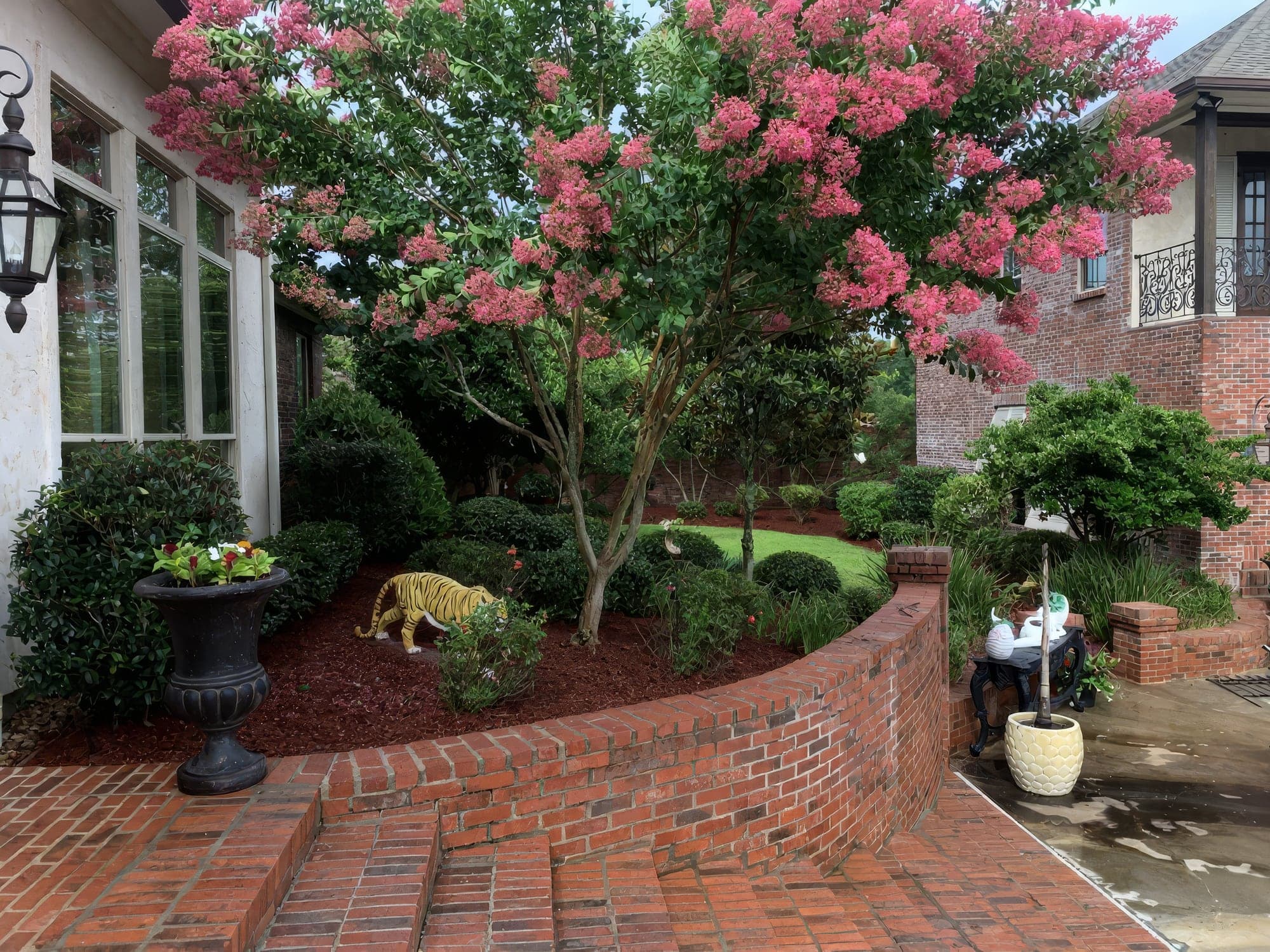
In 2026, the most significant landscaping trends in Baton Rouge are shifting from purely aesthetic choices to functional, resilient designs. Driven by local water management challenges and the city’s FUTUREBR land use plan, homeowners are now transforming their yards into beautiful micro-infrastructures that solve practical problems like drainage and heavy rainfall.
We’ve seen the trends come and go: the all-white modern gardens, the minimalist xeriscaping better suited for Arizona, and the perfectly manicured English landscaping design. But as we move further into 2026, a powerful, locally-driven shift is taking place.
Here at Hernandez Lawnscape, with over 16 years of hands-on experience managing the unique challenges of Louisiana soil and weather, we’ve seen this evolution firsthand. The current landscaping trends are not being dictated by a design blog in California. They are being forged by our reality: the afternoon downpours that can turn a backyard into a small pond, the heavy clay soil that refuses to drain, and a collective desire to build a more sustainable Baton Rouge. This year, the smartest investment you can make in your outdoor space is one that is both beautiful and profoundly practical. It’s about creating a landscape that works with our environment, not against it.
The Shift: Why National Trends Don’t Work for Baton Rouge
It’s easy to get swept up in a beautiful image online. But the truth is, a landscape design that thrives in a dry, temperate climate will fail spectacularly here in our humid, subtropical reality. Our city exists within USDA Hardiness Zone 9a, a world of intense summer heat, high humidity, and periods of torrential rain. The most popular national trends often ignore these critical local factors, leading to frustration, wasted investment, and landscapes that require constant, costly maintenance.
This is where understanding the difference between a nationally-promoted aesthetic and a locally-driven functional landscape becomes crucial for Baton Rouge homeowners.
National Aesthetic-Driven Landscaping (The ‘Pinterest Perfect’ Yard)
This approach prioritizes a specific look, often one that’s trending on a national level. Think vast, lush green lawns of a single grass type like St. Augustine grass, large, impermeable concrete patios for outdoor kitchens, and plants chosen for their color or form without regard for their suitability to our climate. While these spaces can look stunning in a photograph, they are often at odds with the Baton Rouge environment.
- Pros: Can be visually striking and aligns with popular, widely-seen design styles. It offers a straightforward, if superficial, way to enhance curb appeal.
- Cons: These designs often create more problems than they solve. The vast, compacted lawn contributes to stormwater runoff. The large concrete hardscaping prevents water absorption, stressing city drainage systems. The non-native plants require excessive water, fertilizer, and pest and disease management to survive our seasons, leading to high-maintenance headaches and ongoing costs.
Locally-Driven Functional Landscaping (The Smart Baton Rouge Yard)
This philosophy begins not with a look, but with a question: “What problems does my property need to solve?” For most in East Baton Rouge Parish, the answer involves water. This approach uses landscape design as a tool to manage rainfall, improve drainage, and reduce maintenance time. It’s about building a beautiful yard that is also a hardworking asset for your home.
- Pros: Directly addresses pressing local issues like pooling water and soil erosion. By using Louisiana native plants, it drastically reduces the need for irrigation and chemical treatments. This approach builds long-term property value by creating a sustainable, low-maintenance landscape that is resilient to our weather patterns.
- Cons: The initial investment can be higher than a simple sod-and-shrub installation. It requires more thoughtful planning and expertise in areas like soil grading and plant science. The aesthetic may be more naturalistic and less formally manicured than traditional designs.
Resilient Micro-Infrastructures (The Next Evolution)
This is the gold standard for 2026 and where we see the future of landscaping in Baton Rouge heading. It takes the functional approach a step further, viewing your entire property as a small-scale, integrated system. It’s not just a rain garden here and a permeable path there; it’s a holistically designed space where every element, from the plants and soil to the hardscaping and lighting, works together to manage water, support the local ecosystem, and create a stunning outdoor living space. This is the ultimate expression of climate-adapted landscaping.
- Pros: Offers the highest level of resilience and water management. It actively improves the local environment by recharging groundwater and creating wildlife habitats. It aligns perfectly with the city’s long-term sustainability goals and can significantly increase a home’s appeal to environmentally-conscious buyers.
- Cons: This level of landscape architecture and integrated design requires true professional expertise. It is the most significant departure from the “traditional” American yard and represents a commitment to a new way of thinking about residential outdoor spaces.
Trend 1: From Decoration to Drainage, Your Yard as a Water Manager
If there is one unifying challenge for property owners in Baton Rouge, it is water. Heavy rain events can overwhelm properties, leading to standing water that damages lawns, foundations, and plant life. This isn’t just a homeowner’s headache; it’s a massive municipal issue. The City of Baton Rouge has a dedicated Drainage Maintenance division within its Department of Maintenance, tasked with everything from canal excavation to erosion remediation, which highlights the scale of the stormwater challenge we face as a community.
The 2026 landscaping trend is to meet this challenge head-on within your own property lines. Your yard is no longer just for show; it’s the first line of defense in water management. This proactive approach turns your landscape into a functional tool, easing the burden on public infrastructure and protecting your own investment.
Permeable Hardscapes are the New Standard
For decades, the go-to for patios, walkways, and driveways was a solid slab of concrete. Today, that’s like installing a barrier against the one thing your landscape needs most: water absorption. The shift is toward permeable hardscaping materials that allow rainwater to slowly seep into the ground beneath, reducing runoff and nourishing your soil.
- Permeable Pavers: These look like traditional pavers but are installed over layers of aggregate with gaps between them filled with fine gravel. This design allows water to pass directly through the surface.
- Decomposed Granite and Gravel Pathways: For a more natural look, these materials offer excellent drainage for garden paths and secondary outdoor dining areas. They are far more environmentally friendly than pouring concrete.
Rain Gardens and Bioswales: Functional Beauty
Instead of seeing low spots in your yard as a problem, this trend reframes them as an opportunity. A rain garden is a shallow, depressed garden bed planted with water-loving native plants. It’s strategically placed to intercept runoff from your roof, driveway, or lawn. The water pools briefly during a storm, then slowly filters into the soil, watering the plants and recharging the groundwater.
Bioswales are similar but are typically linear, channel-like features that can move water from one part of the property to another, slowing it down and cleaning it along the way. These aren’t just swampy ditches; they are beautifully designed landscape features that can become a focal point, especially when planted with vibrant Louisiana Iris or Buttonbush that attract pollinators.
Trend 2: Aligning with ‘FUTUREBR’, Landscaping with a Community Vision
Your property doesn’t exist in a vacuum. It’s part of a larger neighborhood, a watershed, and a city with a vision for its future. The City of Baton Rouge / Parish of East Baton Rouge has a comprehensive plan called ‘FUTUREBR’ that outlines a long-term vision for more sustainable and resilient land use. The landscaping choices we make in our own backyards directly support or hinder that vision.
This trend is about conscious design that contributes to the greater good. It’s a recognition that a network of thoughtfully designed residential landscapes can have a significant positive impact on our city’s ecological health and quality of life. Baton Rouge has already been recognized for this forward-thinking approach; the city was a partner community in the EPA’s ‘Greening America’s Communities’ program, which focused on incorporating innovative green infrastructure. Now, homeowners are bringing those big ideas home.
Smaller Lawns, Greater Impact
The era of the sprawling, chemically-dependent monoculture lawn is waning. These “green deserts” offer little ecological benefit and demand immense resources in terms of water and maintenance. The trend is toward reducing the size of traditional turfgrass lawns and replacing portions with more functional and beautiful lawn alternatives.
- Native Groundcover Plants: Spreading plants like Frogfruit or native sedges can create a lush, green look without the constant need for mowing, watering, and fertilizing associated with traditional lawn care.
- Meadow Plantings: Converting a section of lawn into a naturalistic planting of native wildflowers and ornamental grasses creates a stunning, low-maintenance feature that becomes a hub for pollinators and birds.
This shift demonstrates how a private residence can contribute to the city’s green network. In fact, our local design community is already earning national acclaim for this type of thinking. The Greenwood Park Master Plan in Baton Rouge won a 2023 ASLA Professional Honor Award, a testament to the power of community-centered, ecologically-aware design over generic aesthetics.
Trend 3: The Rise of the ‘Resilient Bayou’ Yard
This is a design concept we’ve been developing at Hernandez Lawnscape LLC specifically for our Baton Rouge clients. It’s a philosophy born from our local environment that turns our greatest challenge, water, into our most beautiful asset. The ‘Resilient Bayou’ yard doesn’t just tolerate water; it celebrates it. It mimics the function of our natural bayous on a residential scale to create a landscape that is hardy, self-sufficient, and uniquely Louisianan.
The core principles are simple:
- Embrace Strategic Grading: We don’t try to make every surface perfectly flat. Instead, we use subtle grading and retaining walls to gently guide water away from the home’s foundation and into designated areas like rain gardens or bioswales.
- Plant for the Topography: In the lower, wetter areas, we use a palette of water-loving native plants that thrive with “wet feet.” In the higher, drier sections of the yard, we select beautiful drought-tolerant plants. This “right plant, right place” approach is the essence of low-maintenance landscapes.
- Create Functional Water Features: A ‘Resilient Bayou’ yard might include a pondless waterfall that uses collected rainwater, creating the soothing sound of moving water while aerating it for use in the garden.
This approach requires a deep understanding of local ecology and landscape architecture, but the results are transformative. One of our clients recently remarked, “They always go a step beyond what I expect and consistently provide excellent service. Mr. Hernandez is honest and trustworthy…” That trust is built on providing solutions like the ‘Resilient Bayou’ yard, a design that is not only beautiful but solves a homeowner’s chronic drainage worries for good.
Trend 4: Hyper-Local Plant Choices for a Thriving Baton Rouge Garden
Answering the common question, “What are the best plants for landscaping in Louisiana?” requires moving beyond generic lists. The best plants for Baton Rouge are those that are specifically adapted to handle our cycle of intense heat, suffocating humidity, and sudden deluges. Choosing true Louisiana native plants is the single most effective way to create a beautiful, low-maintenance garden that works in harmony with our climate.
These purpose-driven selections provide year-round color and structure while actively supporting the local ecosystem. Here are a few of our top hyper-local picks for 2026:
- For Rain Gardens & Wet Areas: Louisiana Iris (Iris giganticaerulea): Our state wildflower, it produces spectacular blooms in spring and thrives in moist soil or even standing water. Swamp Milkweed (Asclepias incarnata): A critical host plant for Monarch butterfly caterpillars, it boasts beautiful pink flower clusters and loves sunny, wet spots. Buttonbush (Cephalanthus occidentalis): A fantastic large shrub with unique, globe-like white flowers that are a magnet for all types of pollinators.
- For Full Sun & Good Drainage: Black-eyed Susan (Rudbeckia hirta): A cheerful and tough-as-nails perennial that provides a long season of golden-yellow blooms. Gulf Coast Muhly Grass (Muhlenbergia capillaris): This ornamental grass creates a stunning pinkish-purple haze in the fall and is incredibly drought-tolerant once established.
- For Shade & Structure: Southern Shield Fern (Thelypteris kunthii): A lush, spreading fern that can create a beautiful groundcover in shady, moist areas under our iconic live oaks. American Beautyberry (Callicarpa americana): A woodland shrub that is unremarkable for most of the year, but in the fall, its branches are covered in vibrant, iridescent purple berries that birds love.
Pairing these plants with smart irrigation systems and professional garden maintenance services ensures your landscape thrives. It’s important to work with a qualified team, as the state requires that Landscape Irrigation Contractors in Louisiana must have written contracts and liability insurance, a regulation that underscores the technical expertise needed for proper water management.
Evaluating the Key Factors for Your Baton Rouge Property
When planning a landscape renovation, moving past aesthetics to evaluate a design’s core function is key. A potential client once told us, “I felt confident that his business was right for me…Excellent service all around.” That confidence comes from knowing your investment will solve real problems. Here’s how these modern trends stack up on the factors that matter most to Baton Rouge homeowners.
Effectiveness in solving drainage and water pooling issues.
Functional designs incorporating rain gardens, bioswales, and permeable hardscapes are exponentially more effective than traditional landscaping. They don’t just move water; they absorb and manage it on-site, directly addressing the root cause of pooling and saturated lawns.
Long-term resilience against heavy seasonal rain.
A landscape built with native plants and proper water management is inherently more resilient. The deep roots of native species hold soil in place, preventing erosion. The drainage solutions are designed to handle the volume of a typical Baton Rouge thunderstorm, protecting both your landscape and your home’s foundation season after season.
Alignment with sustainable, city-wide land use goals (FUTUREBR).
Every yard that incorporates green infrastructure and reduces turfgrass contributes to the goals of FUTUREBR. These landscapes help reduce the load on municipal storm drains, improve local air and water quality, and create a connected network of green spaces across the city.
Water management efficiency.
A functional landscape is a water-wise landscape. By selecting plants adapted to our rainfall patterns and designing systems to capture and use rainwater, you dramatically reduce or even eliminate the need for supplemental irrigation. This saves money, conserves a vital resource, and is a hallmark of truly sustainable landscaping.
Making the Right Choice for Your Needs
The current landscaping trends offer a powerful toolbox, but the right solution is never one-size-fits-all. The best design for your Baton Rouge home depends on your specific property, goals, and priorities. Here is some tailored advice for different types of homeowners.
For the Flood-Weary Homeowner
Your primary need is property protection and peace of mind. You’ve dealt with the stress of standing water and want a permanent solution. Your focus should be on the foundational elements of water management. Prioritize a landscape renovation that includes professionally installed drainage solutions like French drains, extensive use of permeable pavers for any new patios or walkways, and the creation of a large, strategically-placed rain garden to capture runoff from your roof and other impervious surfaces.
For the Eco-Conscious Planner
You see your yard as part of a larger ecosystem and want to make a positive impact. Your ideal landscape aligns with the vision of green infrastructure and sustainability. You should fully embrace the ‘Resilient Bayou’ yard concept. Maximize your use of diverse Louisiana native plants to create a rich wildlife habitat and a beautiful pollinator garden. Work with a designer to reduce your lawn area significantly, replacing it with naturalistic planting beds and groundcover that support biodiversity.
For the Pragmatic Property Investor
Your focus is on increasing your home’s long-term value and marketability. You understand that in Baton Rouge, poor drainage is a significant liability that can deter future buyers. You should invest in landscaping solutions that offer a clear return. A comprehensive plan that permanently solves drainage issues, incorporates low-maintenance landscapes with hardy native plants, and improves curb appeal through smart design is a powerful investment. This makes the property more durable and attractive, signaling to potential buyers that a common and costly local problem has already been solved.
Ultimately, the most successful and satisfying landscapes in Baton Rouge in 2026 and beyond will be those that are born from our unique sense of place. They will be resilient, functional, and deeply connected to our local environment. By embracing these trends, you are not just creating a beautiful outdoor space; you are building a more sustainable and valuable home.
For a personalized assessment of your property’s unique challenges and a detailed plan to transform your space, contact the experienced team at Hernandez Lawnscape today. We offer a free, no-obligation quote and are ready to help you create a landscape that is built to last in Baton Rouge.
Leave us your contact information to receive more information
FOLLOW ME
Latest publications
Related service
Landscaping Baton Rouge: Design, Renovation and Installation
Landscape design and renovation in Baton Rouge and Livingston Parish.
Written by Gerardo Hernandez, owner and founder of Hernandez Lawnscape
Gerardo Hernandez founded Hernandez Lawnscape in Denham Springs in 2013 with a mower and a trailer. He still walks every job, draws the landscape designs himself in Morpholio Trace, and diagnoses drainage the practical way: find the last spot to dry, trench from there, and run pipe at a steady fall to a real discharge point.